
Neil Stobbs
[Jill Mander of Main Street, Warton unearthed a diary for the year 1892, written by either William or James Whinnerah of Warton Hall Farm, Warton. They were noted Shire Horse Breeders. Jill made a good copy and passed it to the Mourholme]. The original is at Lancashire County Archives.
The diary of an unknown person provides considerable insight into the farming practices of the area in the late nineteenth century. It is thought that it was kept by a member of the Whinnerah family resident at Warton Hall Farm. The original transcriber thought that it may have been written by a James Whinnerah.
The family was not in the area in 1846, 1851 or 1881 from the various information available. They presumably moved into the area between 1881 and 1892 when the diary was written.
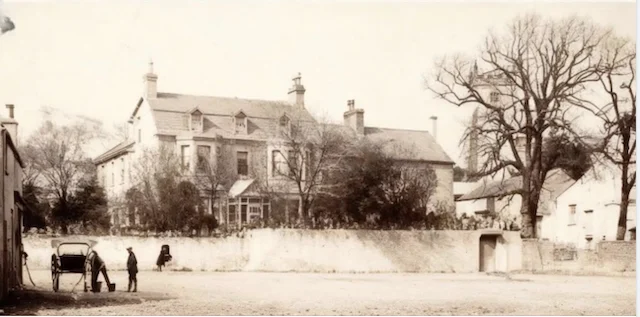
An entry dated 1st February says, “William went to Liverpool“; an entry on 1st March, “James went to London, arrived 7.30 am“. Could suggest that the diary is not that of James but of his father William. Various other entries seem to indicate that William was certainly the author. It seems unlikely that a second son would make entries in the style that many of them are couched. Many entries referring to the family members in a way in which a brother would not have written. The entries referring to William surely point to the fact that they were written by William Senior. James would never have written about his father as William, and William Senior is unlikely to have said, “William went to Liverpool” if he was the one to travel. There are records of the hiring of farm hands at various Hiring Fairs at Ulverston and Kendal, something a second son was very unlikely to have done.
From the 1891 census William Whinnerah (60) was resident at Warton Hall Farm with his wife Elizabeth (59) and with their eldest son Edmond, aged 30, and James the second son, aged 28, and two daughters, Jennet (24) and Anne (21). All the children are single There are two grandchildren, Harry (3) and Lucy (1). There is no indication of parents for the grandchildren living at the farm on the day of the census.
In the 1881 census it was possible to trace the family to Nateby Hall, Nateby, still in Lancashire. In this census there is another son Thomas, aged 17, obviously now aged 27, whose occupation is listed as grocer’s assistant. He could be the father of the grandchildren. The grandson was born in Lancaster, and the granddaughter in Sheffield. The grandchildren are not listed as visitors, so they must be resident at the farm full time.
On a name search in the 1881 census, another William Whiner ( ?? ) Was found, aged 13. He was a boarder at The School House, Over Wyresdale, Lancashire, together with four other male boarders, aged between 9 and 18, and two sisters also boarders aged 10 and 13. They were under the care of Mr. and Mrs. Phizackerley and their niece Miss Hannah E. Phizackerley. The school is listed as an Endowed school, so presumably it was a Church school. It is interesting to note that Mr. P. Aged 53 in 1881 came from Ellel, the same village as Mr. And Mrs. Whinnerah then aged 50 and 49. It would seem that they were contemporaries in Ellel, and that may be why William Jnr. was sent to school with them. By 1891 William would be 23, and could have been the father of one of the grandchildren.
Edmond apparently travelled a lot to various places. On 3rd February Edmond went to Bolton ploughing, (Bolton-le-Sands?); 10th Feb. Edmond went to Lancaster and got paid for two cows from Mr. Turner £35.10s (£1280); 11th Feb. Edmond went to Caton and Hall Gowan sale; 12th Feb. Edmond went to Skipton; 13th & 20th Feb. Edmond went to Lancaster; and on the 22nd Edmond went to London at midnight and got back from London on 27th Feb.
In searching the 1846 Tithe Book returns it has been possible to trace one of the field names, ‘Eldrams’ quoted in the diary as 18 acres, 3 roods, 31 poles. In the 1846 returns it is given as five separate fields Nos. 509-514, the first two pasture, the second three as meadow, with a total acreage of 17.164 acres or 17 acres, 3 roods, and 5 poles. Some discrepancy but it would appear that the five parcels of land had been consolidated into one field by 1892. Shades of the 1950’s? William Jonson occupied the fields in 1846 and the Rev. Watson was the landlord.
It appears from the entries that William Snr. had a number of horses on the farm. It also seems as if he ran stallions, because there is some indication that he used to send various horses on ‘walks’ around various districts of the area, providing ‘service’ to farmers’ mares.
The entry for 25th June says, “Lonsdale started travelling again“. Prior to that Lonsdale is mentioned on 4th April, “Lonsdale shod on front fee“. One entry which at first sight seems strange is: “Engaged J. Askew to travel to Lonsdale £1 per week“. I assume this is William engaging Askew to travel with Lonsdale on his ‘Stallion Walk’.
There are also entries which show that mares were brought to the farm to be served. One entry says that a mare and foal arrived. “Memoranda Mr. Mackereth’s mare and foal came on Friday 24th“. Other entries mention at least eighteen other mares brought for service. It is common practice to put brood mares back to the stallion as early as possible after they have foaled, as the conception rate is higher the earlier they are served after foaling. This is still the practice today. William also hired out his stallions to other breeders: 23 June “Hired Druid to Mr. Foster”.
The entry 13 Feb. says, “Thorough-bred shod“. This seems to indicate that as well as keeping ‘heavy horses’ William also kept lighter types which he calls thoroughbred, which in present times indicated horses derived from racing stock. The “thorough-bred” is mentioned again on 26 Feb .: “had thoroughbred examined” but for what reason is not mentioned! This horse appears again on 5 Apr. “Through-bred shod”. There is also mention of a “blood horse”. It appears that the “Thorough-bred was a stallion that “travelled”.
“Memoranda. Thoroughbred horse finished travelling 2nd July.” Such a stallion would have been used on heavy horse mares to produce a ‘hunter’ type foal, or on hunter mares to produce a light faster hunter. It is noted that he was turned out to grass the next day. “Summer holidays?”
He also dealt, buying and selling horses. 5 Feb. “Sold Yankee mare to Mr. Cape for 50 guineas.” If this were translated into approximately today’s equivalent value, the mare would have been worth £2000! This is based on data in Munby L. 1996. How Much Is It Worth?, British Association of Local History (BALH). Yankee must have been one of the stallions standing at the farm.
There is also mention of “the black stallion” and “Jewel” as they were being sod the next day. By the number of horses mentioned in the diary one wonders if the farrier came to the farm or if horses were taken to him. A memo in October says, “Sold and delivered 4 years old Garnet gelding to Mr. Aspinall, Rochdale on Monday 26 (Sept.) for £40 (£1500). If he delivered the gelding to Rochdale from Warton, did he use the railway? Or how did he do it?
There are entries which show that there was also young stock on the farm part of a breeding program to produce animals for sale and to keep the stud going forward. “9 Mar “Two year old stallion shod“. 6 Apr. “G. Beck paid for foal pasturing in ‘Gales’, 7s” (£12.56).
It would appear that he also took his young female stock to other breeders’ stallions, presumably to prevent in-breeding which may have produced poor stock. 27 June “Took two yearling fillies to Docker Hall”. On 8 August he says, “Took Mr. Mackereth’s mare home and fetched two yearling fillies back, away six weeks“. This would indicate that they had been to a stallion for service and had been kept over to see if they returned to heat or held service. He mentions turning two yearling colts into “Caley seeds“.
There is also evidence that he showed his stock at various ‘Shows’ 7 Apr. “Garstang Show Lonsdale 3rd, Colonel 4th. ” Apr. “Kendal Show Lonsdale 1st and Silver Medal. Colonel 3rd. There is mention that the Kendal Show judges were nominated on 13 Feb. There are mentions of other shows, which he or ‘Edmond’ attended including Manchester, Liverpool, Barrow, Ulverston etc.
Towards the end of the year entries show that he started to break the black horse, “Druid” to working harness. 22 Nov. “put the black horse (Druid) into chains and cart“, two days later “put black horse into roller“. A great deal more information can be extracted from the diary about other aspects of the everyday work on a local farm towards the end of the nineteenth century. This has dealt mainly with some aspects of the “horse” side of the business and some derived information about the family. If it were possible to find out the breed of heavy horse that William Whinnerah specialised in, it would be possible to find more information from the Breed Society “Year Books” and “Lists of stallions”. Kendal Show Society records may also give some indication of the breed in which he specialised , as could records of the Garstang Show.
The second exploration of the Diary would hope to concentrate on the arable aspect of the farm, dates of operations, possible use of machinery, crops sown and harvested, and other details of the use of farm labour and resources for the use of the community.
There also seem to be notes on agricultural societies such as ploughing matches and agriculture shows.
Monday 18th Jan. Warton ploughing Committee arranged to hold the ploughing at Mr Thwaites.
From the 1881 Census a John Thwaites farmed 240 acres at Lane End Farm. In the 1891 Census there is a Thomas Thwaites farming at Cotestones. Where the ploughing match was to be held is open to conjecture at the moment.
The rest of the entries for January tell of ploughing stubble and ley (sown grassland). During the month they carted manure onto the land, presumably before it was ploughed, or to be spread later on grass. There are also entries showing that the farm horses & carts were used for the good of the community.
Friday 22nd Jan. carting with 1 horse for township 1/2 day.
Monday 25th Jan 1 cart on highway 1/2 day.
There are also entries showing the use the horses and carts were put to as the means of transport for various farm and household requirements.
Wednesday 27th Jan. Fetched a load of coal from Carnforth.
It must be assumed that he went to the Railway Coal yard for this load.
Two entries indicate that they used ‘concentrates’ and other ‘imported foodstuffs’ as well as home-grown grain and roots to feed the stock.
Saturday 23rd Jan. Fetched provender.
Saturday 30th Jan. Fetched 4 sacks bran 2 sacks pea meal and 1 oil-dust.
Bran is used in feeding horses; pea meal is used, as a protein source, for most herbivorous livestock and oil-dust was a by-product of the ‘nut oil’ extraction process also used as a protein source. It is interesting to note that fetching of stock feed seemed to be a ‘Saturday job’ at least in January.
February seems to have been occupied with ploughing and pulling turnips. The turnips were carted to the barn where they would be stored for feeding stock housed in the ‘steading’. Another interpretation of the entry of the 10th Feb. Sheep finished big bank turnips is that the big bank mentioned was a large clamp of turnips which had been ‘pulled’ and then stored in a heap which was covered in straw to protect the ‘roots’ from frost. This would make them available to the sheep whatever the weather. Frozen roots are not good food for ruminants.
There are also indications that the sheep were ‘folded’ on turnips, that is they protect the roots in to a restricted area by ‘sheep-nets’ or hurdles. There is no indication if it was nets or hurdles that were used. Considering the coppice woods which exist in the area, one may assume that it would be wooden hurdles that were used. Another entry further on shows that they did indeed use ‘sheep netting’ not hurdles.
During February it appears that there were various ploughing matches held in the local area and further afield. Warton Hall Farm seems to have been a centre for the local ploughing match.
Monday 15 Feb. Mackereth’s, Thompson’s, Clement’s, Hargreaves’s, Lawson’s, and Thompson’s, Overton teams land and stayed all night. If this was the horses or the men is not made clear.
Tuesday 16 Feb Warton Ploughing. Thompson, Hest Bank won for pair of horses with Lawson second and Clement third.
Wednesday 17th Feb Clements team went away. G and M Lawson, Thompson Hargreaves and self went to card at Mr. Burrow’s, Yealand.
Thursday 18th Feb. Hargreaves, Thompson and Messrs Lawson went home at noon should have gone ploughing at Milnthorpe but too hard.
It would appear that the ‘ploughing’ was not the only activity in which this group participated. That is assuming that ‘card’ indicated the manipulation of pasteboards!! Ploughing was the most mentioned activity in the rest of February and early March.
The sons each made a journey to London.
Edmond on the 22nd Feb at Midnight, and
James on 1st March arriving at 7.30 a.m.
It appears they both went on the midnight train? An entry that is rather confusing to interpret.
Wednesday 3rd March Left London 4.30pm. Stayed at the Wrekin Hotel, Wellington all night … Was it James or the writer of the diary who stayed at Wellington? Why apparently break the journey at Wellington? This is one of the difficulties of trying to read the intentions of short entries in the diary. Obviously, the writer knew what he intended to convey, at a distance of nearly 110 years it is very difficult for anyone to know his exact intentions. Another point is that the railways have changed so much that one is not even sure if the line from here went through Wellington.
There is mention of the usual mundane activities essential to running of a farm, collection of provender from the mill and station, collection of coals from Carnforth, returning 66 sacks to Dockray’s and bringing provender back. Apparently Dockray’s were a farm feed stuffs/provision merchants in this area. They had a depot in Kendal until the middle of the 20th century.
A considerable time seems to have been spent in dealing with Manure. Getting it out of various sheds and folds, carting on to the land spreading it and then ploughing it in. There is mention of putting tank on mangold rows in May. This would presumably be ‘liquid manure/urine’ collected in tanks from the cattle standings and then transferred to a mobile tank, and taken out to the fields. Something that we are familiar with, locally, these days but on grassland. I think that the farm was using some kind of ‘artificial manure’ as well as the more traditional organically produced type for on
Friday 20th May. Carting stones from seed field — Sowing manure and rolling seeds.
This seems to indicate that it was in a granular or powder form. The use of the word sowing rather than “spreading”, which is used elsewhere in connection to manure, gives the clue.There are also mentions of jobs being done that were not for the farm but for the community.
Collection of coals for school1,
Carted 3 and 7 loads of stone to Low Weir on different days.
This type of entry continues throughout the year.
One odd entry is on
10th Feb. Mother paid Geo. Beck £5/10s for coals. (present value x35.5 £193). Who is mother? Is it the wife of the writer? From personal experience, this term is often applied to the wife of the farmer, by him, when talking to others. It could of course be the mother of the writer. From the 1881 census this seems unlikely.
At the end of January there is a Memorandum: Dimensions of haystack Width 12ft, Height 8ft 3in. Length 23 ft. This gives it a volume of 2277 cubic feet or 253 cubic yards, if it were a cuboid in shape. It is unlikely to have been flat topped and would possibly have been shaped so that it looked like a building with a sloping roof, the peak of which was 8ft 3in. This would have reduced the total volume. The other possibility is that the height is to the eaves, thus the sloping top would add to the overall volume. Again, we have no way of knowing what the writer meant. Even so it was a fairly large stack, possibly, containing up to 200 tons of hay. There are various references to bringing hay in from the stack, presumably into a loft above the animal housing, thus allowing easier feeding of the housed stock.
One must remember that bales of hay were not common at this period, unless they were produced by hand. They were produced by cutting round a section of a stack, the size of the bale required, with a ‘Hay Knife’ and binding the resulting cube with wires. These bales were usually made when hay was being sold off the farm. It made the transportation of the hay easier than when it was loose. For moving hay around the farm, more often than not, the hay was forked from the stack, after a section was cut with a hay knife and onto a cart and moved to where it was needed.
There is also mention of the purchase of hay from outside sources on 2nd April. It is purchased by the wagonload. The price is given per stone, so it is possible to calculate the weight per wagonload. Price per stone is 4.5d. The cost of a wagonload is given as £6/18s or £6.9 (£244.95) This gives the weight of the load as 2 tons 6 cwt or 2.3 tons. Usually, a wagon is a vehicle with at least four wheels, pulled by two horses or more, whereas a cart usually has two wheels, and was pulled by one horse. By the end of the month the price being paid had risen to 6d, 7d and 8d per stone, on different occasions. This is usual as supplies run out at the end of the season.
If the farm was advanced technically, they could have had the machinery run by a steam engine at this time or they may have had an elevator and other ‘barn machinery’ run by a horse-driven mechanism in a ’round house’ or ‘gin-gan’. There is mention of buying and setting up a ‘new boiler’ towards the end of the year. Again, we do not know to what use the boiler was put. It could have been the source of steam for an engine. It could have been used to produce hot water, for various farm and or domestic uses. It could have been used for cooking potatoes or other roots for feeding to stock.
The first ewe lambed on 27th March. This date is typical of lambing times for many farms in various northern areas. It is timed to coincide with the growth of early grass, which has always been an economic decision, to provide good grazing for the ewes and hence allowing them to produce sufficient milk for the lambs. It saves on supplementary feeding. Later in the year the sheep were ‘cleaned’ (had adhering dung cut off the wool around the rear end), then washed and finally clipped sometime later.
From various entries it can be seen that the farm grew turnips, mangolds, oats, barley and potatoes as well as areas of ‘seeds’. The use of fallowing is mentioned a number of times, showing that the process was used as a means of weed control. There were also meadows and pastures that were treated in various ways with manure and fertilizers.
Many common farm operations are catalogued in the diary and it is possible to work out the work calendar for the year of 1892. This is beyond the scope of this article. There are also entries showing various purchases and other transactions that are necessary for the continuation of a farm business. Purchases of implements such as ploughs of various types and harrows are recorded. One of the implements purchased is called a ‘stitching-harrow’. Its function was to control weeds and the size of ‘ridges’ on which root crops were grown with the consequential improvement in crop growth. The use of harrows continued through June and most of July. The cleaning and weeding of turnips continued into August.
One other noted entry is that they replaced mangold plants in the gaps left in the rows possibly due to poor germination of the first sowings or poor singling!
A “suit of horse clothing”, presumably a full set of harness was ordered from a supplier in Kendal. There are other mentions of purchase of pieces of harness such as head collars. Also, a waterproof coat was purchased for one of the stallions. It would be used when the stallion was travelling around the district to serve other farmers’ mares.Seed potatoes were purchased from an outside source and ‘ware’ potatoes were sold to the Co-op in Carnforth.
There are entries indicating that the farm enterprise included the fattening of cattle for sale. Above all the horses were the main enterprise of the farm. It appears that the means of cutting grass for hay was in the process of change. Various entries tell of the use of scythes to cut grass.
1st July. Started Hay time
4th July Mowing bank tops.
5 July Finished mowing bank tops with scythes.
There are other entries that show the existence of mowing machines.
29th June. Took mowing machine to Carnforth smithy.
2nd July Fetched mowing machine from Carnforth smithy.
5th July. Began mowing with machine in Keer Meadow.
They finished mowing this field the next day. The acreage given in the list at the front of the diary is 3 acres 2 roods 2 poles. The spelling of the meadow’s name is also different, ‘Keir’ as against “Keer” in the entry. By the 9th July they were working the hay in the Keer meadow. 15 loads of hay were carted from Keer Meadow on 11th July. They had made and carted the hay in six days, which must have been an indication of very good ‘Hay Weather’. Modern farmers would be pleased with such conditions to win what little hay they now make.
Some of the fields are obvious from the listing at the beginning of the diary, but some are not so obvious. For example there are a number of entries referring to Dudley which does not appear in the listing. There are fields called Near Mill Head about, Far Mill head about, and Mill Head with a combined acreage of about 20 acres. “Dudley” was the name given locally to the Mill Head to accommodate the workers from the Midlands who came to work at the Iron Works at Carnforth. The various entries that mention Dudley seem to indicate that the land was sown to grass that was cut for grass seed production as well as hay.
Saturday 9th July. Began mowing seeds at Dudley.
Monday 11th July 6 Carts of seeds from Dudley. Finished mowing Dudley field.
Wednesday 12th July (Tuesday or 13th). Fetched 4 carts hay from Dudley.
Over the rest of the week 30 loads of hay were carted off Dudley including the ‘rakings’. There is also an indication that the grass was put into ‘cocks’ as a way of protecting them from the weather.
Friday 15th July. Cocking hay in Caley Land.
There were four field names containing the word “caley” amounting to about 11 acres approximately. 26 loads were brought out of Caley Land, a yield of 2.37 loads per acre.
Another field called Big Meadow acreage 15.5 acres. The yield is difficult to calculate, as the entries are somewhat confusing.
Monday 18th July Began cutting Big Meadow
Thursday 21st July Strewing part of Big Meadow
Friday 22nd July Cutting grass in Big Meadow
Saturday 23rd July 11 Loads from Big Meadow. Finished mowing.
Monday 25 July Carted 25 loads hay out of Big Meadow. Finished stacks with 50 loads.
Tuesday 26th July Finished housing Big Meadow except rakings. 24 carts.
Wednesday 27th July Carted 3 loads rakings out of Big Meadow Finished haytime 171 carts.
It could be possible to calculate the weight of hay produced on the farm, if it were possible to find what was meant by a load of hay, and from what acreage it was produced. There seems to have been an interchange between “loads” and “Carts”, which adds to the confusion.
As soon as hay time was finished, work on other crops and farm maintenance followed immediately.
Thursday 28th July. Stitch-harrowing turnips. Cleaning ditches out. Finished stacks out.
Stitch-harrowing as mentioned above, consisted of the use of a special type of harrow that was designed to run across and between ridges upon which the turnip seed was sown. Finished out the stacks refers to the need to build up the stack ridge to enable it to be thatched after the hay in the stack had settled. The settling could be due to the weight of hay gradually forcing out any trapped air, or because the stack had ‘heated’ due to natural fermentation producing heat and reducing the volume of hay on the stack. The fermentation could have been due to improperly ‘cured’ or partially dried grass being incorporated in the stack. Also, it could have been due to rainwater seepage into the stack setting up conditions suitable for growth of mould and bacteria.
The work on the turnips and clearing ditches continued until the middle of August. Some change of task was introduced for the workers by having them “Cutting thistles”. Wilkinson, presumably one of the workers, thatched part of the clover stack on Monday 15th August. Thatching continued for a number of days, presumably until the stacks were all thatched.
Saturday 20th August Went to Kendal and Lancaster.
This involves a round journey of 15 miles to Kendal from Warton, and about 22 miles from Kendal to Lancaster and 7 miles from Lancaster to Warton. A total of at least 42 miles. If he rode a horse or had a light gig I should imagine he could not have done the journey in less than 5 hours. The horse would have been somewhat overstretched? Did he use the train? Which station did he go from, Carnforth? It would be possible to work this out from timetables. But why did he go, what did he do and how long did he spend in Kendal and Lancaster. What time did he leave and what time did he return? All questions raised by a simple entry in a diary. A further avenue for research?
The beginning of autumn was the season for agricultural,
9th August Whinmarleigh,
16th Blackpool,
24th shows, Lancaster,
25th Skipton,
26th Barrow.
16th September K’by show (presumably Kirby Lonsdale).
20th Ulverston,
22nd Kendal.
Most of the shows seemed to only occupy one day, but the entries for 4th and 5th October show that they went to Chesterfield on the 4th to get ready for the show on the 5th. The entry finishes – got back at night.
The more usual work on the farm is recorded, showing that despite the travels of the “Boss” and Edmond, away from Warton, normal everyday work continued.
Monday 22nd August, Cleaning ditches and turnips. Took 12 lambs to auction mart not sold.
Presumably the auction mart was Carnforth, and the trade for lambs must have been poor enough for William Sn. to have brought them home again. I am sure that a hired man or even a son would not have made such a decision. During the last week of August there were 5 days when a man and a horse were all day for the township also an additional one half day. Part of the continued commitment of resources to the good of the township. A social duty of an important citizen of the township.
On Monday 29th August harvesting began. Began cutting oats behind the house with scythes. Very heavy rain. The weather seemed to be against the farmer even then!
Tuesday 30th August. Trimming hedges. Ploughing headlands. Heavy showers. Obviously heavy showers did not stop some work, but it must have stopped harvesting. The showers continued on the 31st.
1st September the weather apparently allowed corn to be cut with scythes. By the 2nd it was possible to begin mowing grain with machine.
They were also opening out in Caley land. Mowing with machine would seem to indicate that the machine being used was the same as was used to mow grass earlier in the season, not a ‘binder’. It is not at all clear if a binder was available and in use. Later entries say reaping rather than mowing. There is no indication of the necessary labour for hand tying of sheaves being available or being used. The corn crops mentioned specifically are barley and oats. There is no mention of wheat.
The cut corn stayed in the field for 15 days (2nd to 17th Sept.) Presumably in ‘stooks’ of 6 to 8 sheaves, to allow time to dry out to a stage suitable for stacking. One saying about the length of time corn should stay in stook was that they should hear “three sets of church bells“. A minimum of fourteen days. The oat stacks were thatched on 20th September. The diary records this day as very wet. It seems odd to thatch a stack when this type of weather was about. It could have been the thought that the sooner it is covered the less damage may occur. There is mention of wet in the morning but with the proviso fine after 9 a.m., in another entry. What time constituted morning? Potatoes were a crop grown on the farm and harvesting of them began on Friday 7th October. The entry for
Wednesday 12th October indicates that the potato and fruit harvests are ended. The only earlier mention of fruit is on the 24th September that records getting pears.
During the harvest season the business of livestock farming went on, lambs were being sold at market, horses came and went, calving cows were sold “with the calf back”.
Everyday tasks of maintenance proceeded some of them not particularly pleasant. Gas tarring sleepers, tarring loose box in paddock, cleaned out pigsty, collecting barrel of gas tar from Burton, cleaning loose boxes, carting manure into Nicholson Paddock.
By the middle of October, the farming year was progressing towards winter. Mangolds were being pulled and carted for winter stock feed. Trashing days were recorded. Oats were being cleaned in preparation for feeding stuffs. 40 lambs, 20 gimmers and 20 tups were sold. This indicated that a considerable number of sheep must have been part of the livestock on the farm. Gimmers are second season sheep that have not had a lamb. Tups are male sheep used for breeding. To have 20 tups for sale must indicate that one of the sheep enterprises must have been the breeding and rearing of tup lambs for sale. This was, and still is, a specialised type of sheep husbandry that requires considerable expertise, and good stock.
One of the typical social and neighbourly actions of the farming year is recorded in the entry for
Thursday 27th October. Sent 5 men to help Mr. Newby threshing and one horse. The following day records that the 5 men and a horse were at Mr. Newby’s till 10 o’clock a.m. This practice of sending workers from the surrounding farms to a ‘threshing day’ at a particular farm was common until the complete introduction of ‘combines’ in the late 1950s and early 1960s. Even then in the remoter areas where corn acreages were not large and farms small, threshing days continued for much longer. The use of contractors in such areas saw the end of the travelling threshing machines. The results of threshing days at Whinnerah’s according to various entries in November were transported to the station. Apparently 120 loads of barley were so disposed of. Barley was also taken to Bolton Mill on the 26th, where it was ground and collected on the 30th.
During the rest of November and December the usual winter jobs were carried out pulling and carting turnips, carting manure to various fields, bringing in cattle and horses during the night, as the weather got colder. Riddling potatoes appears on the 3rd December. The sale of lambs at auction and to a private buyer occurs during the month. By 5th December there was 3 ins of snow reported and the sheep were being given turnips to supplement the grazing. The sheep that had been ‘boarded’ from Paint Mines for 5 weeks and 3 days were returned home, and it is recorded that they had the use of the ram, turnips and straw. There is a note on the 11th that Mr. Croft was paid for turnip cutter. This indicated that the turnips fed to the stock were prepared by chopping them into pieces, rather than feeding them whole. On the 31st it is recorded Put sheep on turnips, indicating that sheep were also folded on turnips as mentioned earlier in the year.
There are a number of entries concerning ‘turf’. It seems that the farm must have had turbary rights on one of the local ‘mosses’, and that the turf was used, presumably as fuel.
Preparations for Christmas are mentioned on the 20th plucked geese. Also, on 20th Got cheque for barley from Hull & Sons £96 (£3485 at present values). This gives a price per load of 16d. (5.68p) or at present values £29.
Sunday 25th December Warton Church re-opened after re-seating. It may be assumed that William Sn. and the rest of the family attended. Other Sunday entries refer to church attendance or the people who were visiting or where the family visited. So the year drew to a close and the family continued its life at Warton Hall Farm.
There is still a considerable amount of social history to be extracted from the diary. Many persons are named and it would be interesting to trace them and build up a picture of the social life of Warton and district in the late 1890’s. But that is for another day and possibly another researcher.
Published in the Mourholme Magazine Issues 40 2000 and 41 2001