by Mrs. Muriel Wild
The reference to Dr. J.W Jackson in Dr. Andrew White’s article on the Silverdale Pottery sent my memory rolling back to the years 1932-35 when 1 was a student, reading Classics, at Manchester University. 1 became interested in “caving” both as a sporting activity and as an archaeological discipline concerned with the identification and dating of the prehistoric human and animal bones and artefacts found in caves.
Going further back I learned about Sir William Boyd-Dawkins who had published his famous book, “Cave Hunting”, in 1874. At that time, Boyd-Dawkins was “Curator of the Museum and Lecturer in the Owens College, Manchester”. (Owens College became The Victoria University of Manchester shortly after this date). Boyd-Dawkins did a lot of work in the Elwy Valley and Cefn area (which lie between the uplands of the Denbigh Moors and the North Wales coast). Before the advent of the motor car, the North Wales Limestone area was easily accessible by train from Manchester. Dr. J.W.Jackson was an active cave archaeologist by 1910-1912 – vide references in “The Prehistoric and Roman Remains of Flintshire”, 1949, by Canon Ellis Davies. As a young man Dr. Jackson had come under the influence of Sir Boyd-Dawkins.
In the 1940s after my husband and I had come to live in North-East Wales, we joined the Dyserth and District Field Club (founded 1911) and found that this club had actively supported Dr. Jackson in the excavation of the Gwaenysgor Cave at the foot of Gop Hill in 1930.
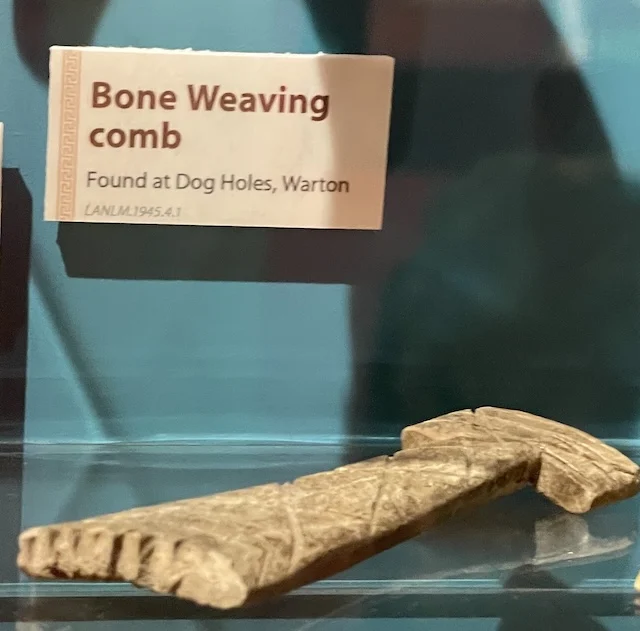
In 1953 “British Caving, An Introduction to Speleology” was published by members of the Cave Research Group. Dr. Jackson contributed a 76 page chapter on Archaeology and Palaeontology, and in this he describes three caves on Warton Crag – Dog Holes, Badger Hole and Fairy Hole. Excavations were “from 1909 onwards”. Dog Holes produced evidence of Romano-British occupation. Deeper in the cave was a Neolithic or Early Bronze Age burial chamber with human remains. Lower still were yet earlier animal bones Badger Hole produced no human remains, but there were signs of human occupation, including a knife handle and bones of wild and domestic animals Fairy Hole had been occupied by humans, probably in the early period of Roman domination An iron needle, some flint flakes, and an example of first-century Samian ware were found.
Dr. Andrew White says “Jackson was what we would call today a Palaeontologist rather than an Archaeologist”. Jackson heads his chapter in British Caving 1953 “Archaeology and Palaeontology ” Nellie Kirkham, whom we both knew well, in her chapter on “Caverns in Mines” uses the term “Palaeontological”, so the term “Palaeontology” is certainly over 50 years old.
Sir William Boyd-Dawkins’ book is dedicated to “The Baroness Burdett-Coutts, the founder of scholarship for the encouragement of geological science in the University of Oxford”, and he adds that it is “a slight acknowledgement from her first scholar” My copy of Boyd-Dawkins’ book was a gift by him to Leonard Tatham and following his signature is the date 27.V.1913 This proves that Boyd-Dawkins was still alive when Dr. Jackson was leading active digs in the first decade of the twentieth century.
[Ed A number of finds excavated from the holes are now on display at Lancaster City Museum]
First published in Mourholme Local History Magazine Issue 38 2000