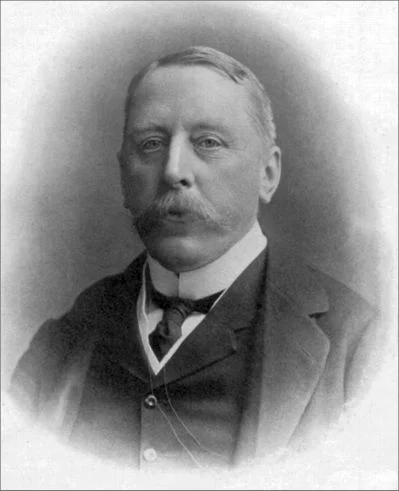
by ‘A.R.’
This typescript book was recently given to the Mourholme Society. Heavily bound in leather with gilded lettering, it records in detail the daily events of the holiday, illustrated with many contemporary postcards. We do not know who “A.R.” was. We only know that his holiday began when he caught an early train from Sunningdale and travelled via London to the North. Referring to a similar tour made in 1906 he writes “Another record of a pleasant holiday. How much pleasure is added to life by means of such records.”
Here is the first of three extracts from A.R.’s journal. His route from’ Arnside to Borwick is recorded so meticulously that it can easily be followed to-day. The return journey is harder to follow. Could “A.R.” have fallen asleep? It seems probable that he was an elderly man. In one of the other extracts we find him sitting in the carriage when others got out to walk to help the horses, and he did not attempt to cross the stepping stones near Grasmere, though he boasted that he had done so twenty-five years before.
Extract I
Thursday, August 8th 1907. Today was very fair indeed. We were expecting the visit of Mr. and Mrs. Fell, and little Bessie. They came to Arnside by train arriving about ten o’clock. After a little breakfast we took two boats out and had about two hours on the water. We enjoyed it very much and then came home for lunch. As soon as we had got that over, the weather continuing fine, we decided to have a drive as far as Borwick Hall and back. Mr. Bush sent us a small waggonette, but finding it to be too much so, we got the driver to change it for one a little larger. This we found most comfortable and so set off. Our route lay by Sandside, Milnthorpe, Whassett Farm, over the Bela at Hang Bridge, along Farleton Knott, (where we met a “tourist-shoe-black”, evidently out of work), passed the L&N.W. Ry, when we noticed a very fine house with beautifully-kept grounds. This was “Helmsfield”. Then we came to Holme, observing “Brook House”, occupied by a Mr. Rothwell, and intimate friend and neighbour of the “Parker” family. Leaving Holme we crossed the Canal Bridge, and had another sight of children on “clogs”. Just near here is a very nice house with fine “rockeries”. Turning now into the Main Road we proceeded past Clawthorpe Hall and into the little village of Burton. Here we saw the Vicar having a chat with one of his parishioners. The Vicar is a Mr. Carpenter. Passing on by Burton house and Thorn Leigh we came to Dalston Hall, occupied by Major Hornby; and so to Buckstone Hall, the residence of Miss Burrows. This property seems to be an exceedingly pretty one, and is in a very neat condition; in the afternoon sunshine it appeared most attractive. Just near we saw another poor fellow at work, a one- legged stone-breaker. Close by we were struck with a “shippon” having most peculiar windows; I fancy it was owned by a Mr. Muckalt, a gentle-man farmer of Priest Hutton. At Priest Hutton church we saw an old-fashioned Lych Gate. Passing along by Lindale Hall (Mr. Sharpe’s) we arrived at the village of Borwick and soon were in the courtyard of the old Hall.
There we had tea – there is always a plentiful supply ready – and then some of the party inspected the ruins1.
Here again we came across children in clogs. One hardy little mite, fifteen months old, was trotting about in them as comfortably as could be. We have never seen any of this foot gear in the South of England, but it apparently won’t die out in the North.
We made enquiries about the “Book” on Borwick, but found it was in tatters. Wishing once more to keep all the information available together, for the use of any future visitors, I offered to re-write the whole, and bind it in a more durable form. Mrs. Jackson most kindly lent me the papers again for the purpose, and I brought them home.
Since then I have written it all out on linen- backed sheets, had it well bound, and have sent it back to Borwick Hall for the pleasure of visitors. Needless to say, I have kept an exact facsimile for my own library.
On our return to Arnside we noticed at Capernwray Hall, a “mounting-stone” (I forget the old north-country name). One does not come across many of these things nowadays.
Coming along by the Four Lane Ends we met several Brakes and Charabancs returning to Morecambe from their afternoon trip to the Levens Hall Gardens. At Town End some houses by the road side are protected by railings. The road here seems to have been filled in at some time, and is practically level with the cottage chimney-tops.
Leaving Burton we turned to the left and passed under the Aqueduct near Burton station; and were soon into the Main Road again. While driving along by the “Garden of Eden” a very neat little “Baby” motor passed us. It almost made one break the Commandment against covetousness.

Fairy Steps We had a fine view of the Fairy Steps before we came to the Stream which divided the two Counties at Brackenthwaite Farm. I believe the stream is called “Leighton Beck”. At the farmhouse there was a lovely rose-bush in full flower. Then we came on by Coldwell Farm, and the Crossings, to Arnside, so ending a very pleasant outing.
Extract II
Monday, August 19th 1907
This morning we set off for a tour round the lakes. The six lakes tour. Mr Bush’s cab took us to the Station, and we left Arnside at 9.46, arriving at Lakeside at 10.50; here we directly got upon the boat on Windermere, the “Tern”, and set off up the lake, against a strong wind. We made the usual calls at the various boat landings, and found a considerable amount of boating at the “Old England” hotel landing. We reached Waterhead at 12.20, having had a fine blow as we sailed up the lake.
We took the bus up to the Wansfell Tower Hotel and had lunch there. Finding we could stay there for a night we did so. At the “White Lion” we got a wagonette and drove round by Fleming’s place, Brathay Hall and Church, Red Bank, (the new road), and so on to Grasmere.
At the top of Red Bank, Mr Butcher and Parker set off walking across the footpath and so entered the new road. On their way Parker slipped in the little rill and got terribly wet; Mr Butcher also stumbled on the slippery grass, but did not much harm. The rest of us rode down the steep bank and waited at the bottom for the arrival of the pedestrians. We were sorry to hear of their mishap, and decided to hurry back to the hotel at Ambleside.
After a hasty glance round the churchyard, we purchased a few postcards, and drove off, fearing that colds might result from the wet clothes that Parker was wearing. Coming round the lake we pointed out Wordsworth’s seat, the Wishing Gate, and the Stepping Stones, &c. to Mr. Butcher.
At the Wishing Gate we stopped to examine the bars to see if the old initials we had carved on one of them some years ago were still discernible. It was a very pleasant surprise to find them still there, for we afterwards found, on reference to our diaries, that we placed them there on 30th April 1882 .- twenty five years before. The gate was simply a mass of rude attempts at initial-carving, and the wonder was that it had stood so long. We made no additions to it on this occasion.
On arriving at the Stepping Stones our people at once ran across them. I did not venture, although on the 29th April 1882, when the stream was running level with the top of the stones, I was foolhardy enough to tackle the crossing, and did it successfully. I put it this time that not only was the necessity for so doing absent, but that there was now added responsibility on me, the consequence of my early impetuosity.
Soon after we reached the Wansfell Tower, and at once made Parker more comfortable. Happily he took no cold from his immersion.
After dinner we amused ourselves in looking about the hotel and its surroundings, and were highly amused at the performances of a score of Roman Catholic clergy who were staying there. They had rooms to themselves, and they were a merry party indeed. Whatever duties were imposed upon them during the day, and I believe they had no small amount of them to attend to, they certainly devoted their evenings to the lighter side of entertainment. They seemed to keep one person exclusively occupied in drawing corks, and the rest of them were engaged in singing all the latest songs, (much to the amusement of passers-by), and in enjoying themselves to the full, until the time for closing arrived. They were fine specimens of the “Friars of Orders Grey”.
The Wansfell Tower Hotel had been built, so I was informed, for the purpose of a Roman Catholic College, and its windows and other features quite led one to realise that such had been the case. The rooms were lofty and spacious, and the accomodation was just such as a building of that description would suggest. Possibly at some future date we may learn more about it.
… As we had arranged to go early the following day to Coniston, we made the most of the time allowed by our hilarious house-fellows for sleep.
Extract III
August 20th 1907
Having washed and refreshed ourselves, we looked round the Ambleside shops and made our way up to the Salutation Hotel, where the coaches start for Keswick. We got our seats on the Coach, the back seats, and we found that we fully occupied the whole of that back seat, notwithstanding the endeavours of the coachman to make room for “six”.
The fact of the matter is that this Coach business is a most disagreeable “frost”. They advertise everything as being most comfortable, and they seem to be utterly ignorant of everything except Compound Addition. They pretend that each seat must hold so many persons, and it is no concern of theirs whether these persons are infants or adults. However, in our case they did not succeed in what was simply an utter impossibility. Of course we had the pleasure of listening to their special abuse of everyone who did not quite agree with their pre-conceived notions as to the space actually required for each person. A shower of rain, though slight, did not add to the pleasure of the start. At last we got away, and the rain ceased. It was not until we threatened to write to the Furness Railway Co. and to other responsible parties, that the insolence of the coachmen ceased.
We followed the same course as in 1906, by Grasmere and Wythburn. As we proceeded the rain began to fall heavily, and all the way up to Wythburn it literally poured down, with the result that all of us, wrapped up as we were, and provided with umbrellas, were simply drenched. Mr Butcher and Parker walked and so were well tired in addition to being wet. They avoided, however, the pretty wee rills that always abound on a charabanc when it is found necessary to put up umbrellas in a storm of rain, and which so materially assist in finding out a way to one’s neighbour’s skin. In this instance we all were neighbours. The effect upon hats and bonnets was appalling.
At the little Inn we did not stay long, although we managed to get a cup of tea which was very acceptable. Since our last visit the dear old landlady had passed away. We were favoured with the same old blue china. This little inn is a delightful place, and travellers seem always to be readily supplied with the little comforts they need, and the cheery manner of the servants and others in attending to everyone is worthy of mention and is much appreciated.
Soon we were off again, but it was found to be necessary to “water the horses” (and the driver too) at the King Edward Hotel further on.
The rain somewhat subsided as we proceeded and the journey ended all right. It was more than we had expected, as the capacity of these drivers seems to be unlimited when pints of beer are agoing. This ought not to be so, as they are in charge of four horses all the time, as well as a mixed load of passengers.
However, all’s well that ends well, and we arrived safely at Keswick. We were set down at the George Hotel and soon found our way to 7 St. John’s Terrace, where our landlady for this visit lived. The accommodation was exceedingly good, and Miss Graham (the landlady) very soon had us all made very comfortable. A bright fire and a change of clothes, followed by a good dinner, soon made us happy and refreshed. We remained indoors for the evening, and amused ourselves without any difficulty, for there was a piano and other attractions in our sitting room. Our bedrooms were equally comfortable, so we felt we had fallen upon a good lodging.
Parker’s boots were so wet that we had to send out and buy him a new pair, to be in readiness for the morrow. Happily we found that none of us had suffered any ill effects from the drenching rain. We had had a very eventful and busy day, and were glad to retire to rest about ten o’clock.
Honister Pass
Wednesday, August 21st, 1907
A very wet morning caused us to hesitate whether we should turn out or not. The charabancs were all driving round in that alluring fashion to which we were so accustomed, booking seats for “anywhere”, but for Honister Pass in particular. For some little time we considered matters and decided to have none of them. After a further while we put on our so-called waterproofs and went out for a stroll in the town to see how matters stood … Although it did not really cease to fall, the rain seemed to be more kindly disposed. We decided to risk it.
But the coaches had all (or as many as could get a complement of passengers) set off at ten o’clock; now it was half-past. So we tried one or two hotels for a suitable brougham for the day, but the terms were prohibitive. However, we found our old friend at the Queen’s had some horses apparently doing nothing, and we made suitable terms with him. By eleven o’clock we were seated inside a closed landau and prepared to face the elements to Honister and Buttermere.
… When we got to Seatoller we found that a new road had been completed up the Pass, for the use of the slate company’s carts. It was much easier than the old road, the ascent being rendered much less difficult by winding away in gentle slopes. On payment of a Sixpenny Fee public conveyances are allowed the use of this road. We tried it, but although we found it more convenient, it was certainly much less interesting than the old one … We arrived at the top of the Pass all right, the pedestrians being much less fatigued than on the former ascent.
Nearing Buttermere we met an old man, apparently of the unemployed class, and, considering the arduous walk in front of him, we encouraged him in a manner he quite appreciated.
Leaving Buttermere on our return journey we slowly climbed the long road leading through the Newland Valley. Although we would now and then have a ride, for the greater part of the way there was nothing for it but walking; even I was obliged here and there to join the pedestrians. It was amusing to see the manner of the horses when called on to rest a little, they did the “easing back” into the little ruts just as if they had the thing off by heart.
All the same, one cannot help feeling “done” when one takes into account the long distances the tourist has to foot it, notwithstanding it is given out in the railway and other Notices that the Coaches will convey passengers to so and so. This is not as it should be. A short walk no-one would probably object to, but when it means “miles” of exertion, it is no joke. The Companies ought to employ such a number of horses as would be able to carry or pull the passengers up these hills, except in extra-steep places, or to adjust the load to the horses employed. The remedy is with the tourists themselves.
By the time we arrived at Keswick the Pencil Works were closed, so we did not visit them this time. After dinner we spent an hour or two looking round the shops in Keswick, buying postcards at Pettitts. In Pettitts we came across two “pure Northumbrians” who entered into conversation with us. To Mr Butcher the northern burr was highly amusing; but the couple, who were having a short holiday, evidently enjoyed themselves.
Having had a long day we were ready for a good night’s rest.
- Borwick Hall was bought by J.A.Fuller-Maitland, music critic of the Times in 1911, at which time it had been unoccupied for some fifty years. ↩︎
Published in Mourholme Magazine Issues 30 1997 and 31 1997
by Joan Clarke
For ofens we talk to' my darter es died o' the fever at fall; An I thowt 'twur the will o' the Lord, but Miss Annie she said it wur draains. Tennyson, The Village Wife
The public health enthusiasts of the nineteenth century, like Miss Annie, were dedicated believers in drains as a safeguard against infection and death. Indeed with the population increasing so rapidly it was certainly time to find some other way of removing human excreta other than piling it on middens. In the towns the answer was, eventually, water-closets and water-borne disposal of the contents through drains and sewers, though even in towns the process was not complete even at the time of the First World War. Round here Lancaster did quite well. In 1920 the Medical Officer of Health for Lancashire was able to report that over 99% of domestic sanitary installations in the Borough were water-closets connected to main sewers. In a smaller town like Carnforth the percentage of water-closets was 69.5. But what about the countryside?
In Lancaster Rural District, at the same date, the water-closets formed only 40 per cent of all installations. However there is no need to read official reports to know that, in rural districts, water-closets were slow to replace older systems. There are plenty of people still alive who will remember the “ash-pits” and the carts that came to empty them. Even these ash-pits were an improvement on the arrangements of former centuries. We know from the Warton Manor Court Book that in 1699 Elizabeth Burrow had a dung hill “… at the uper end of the weend [Crag Road]”. It stood before her barn and was “… 3 yards in Breadth and 4 in Length”. Another ‘dunghillstead’ is described as “at the street side”. It had been there for twenty-five years. There can be no doubt that these, very public, middens received not only the sweepings of the farmyard, but also the contents of chamber pots, close-stools and privies. Close-stools (what we would now call commodes) could be used in the warmth of the house, but someone had to empty them. A privy or more properly a privy closet was sited, usually at a chilly distance from the house, over its own midden. The midden would only have to be cleared when the owner needed the dung for his land, or it was becoming inconveniently full.
It was not a practical proposition to replace these primitive arrangements with water- closets and sewers throughout a rural district. The population was thin on the ground and no local authority could think of building such miles of sewer for so few people. Besides sewers needed piped water to flush them and that was a scarce commodity. Carnforth, which by 1871 had grown to a small town of 1,061 inhabitants, out when water-closets became the fashion before the opening of its reservoir at Pedder Potts in 1879. A member of the Rural Sanitary Authority visited the town in 1876 and commented bluntly “… there was no water to flush sewers, and there was a stench from outfalls”. Other villages were slower to obtain piped water, Silverdale not until 1938.
In 1870 Dr Radcliffe of the Local Goverment Board made the sensible suggestion that, in small and scattered communities, it would be better to improve privies rather than turn to “novel arrangements”. He suggested two improvements. Firstly provision could be made to add earth or sand to the contents of the privy “to render them more solid” and less offensive to clear than the usual putrid, semi-liquid mass they contained. This type of closet was what came to be called an ash-pit. A really successful ash-pit required a supply of well-sifted ash or earth if the contents were to be kept sweet. The reports of Sanitary Inspectors make clear that these were not always forthcoming. As late as 1912 three houses in Warton were described as having “Privies in a tumbledown state. Ash Pits only holes sunk alongside the privy and roughly walled round. One uncovered and containing water from the roof of closet … this offensive liquid mingling with the privy contents.”
The second method suggested was to replace the midden by a closed, impervious container to form a “pail-closet”. Pail-closets were increasingly used in Lancaster Rural District. They formed 15.8 per cent of all installations in 1920 but 31.5 per cent by 1938. Whether they were much used in the villages of the Mourholme area is not known. Wry memories of the ash-pits have been recorded, but not of pail-closets. Perhaps someone can enlighten us.
Of course both systems required a well- organised system of emptying and disposing of the contents. Pails in particular were usually designed only to hold a week’s “supply”. Was a satisfactory frequency of clearing privies achieved in Lancaster Rural District? The answer seems to be no, not reliably until well on into the twentieth century. The problem was confounded by the fact that even in the villages water-closets were being installed and, in the absence of main sewers, these could only drain into cess-pools. These too needed emptying.
In 1902 the District Medical Officer, in despair of ever getting his Authority to move in improving conditions, called on the Local Government Board to help and an enquiry was set up under a certain Dr Mivart from London. Warton, he found, had had sewers since 1875, but the system consisted of two separate sections of pipe; the main one received drainage from water closets and led to a cesspool on ‘the Weir’, a green in the centre of the village where the school children played and where there was a watering place for cattle. It was no longer a main supply for people, but some still preferred it as drinking water because they felt it tasted better than piped water. Dr Mivart made an acid comment that it was perhaps fortunate that “at Warton … the Limestone comes to the surface … cesspools receiving liquid drainage are said never to require emptying”. One is glad to report that he was equally scathing about the whole of the rest of the Rural District.
The emptying of cesspools and privies continued a problem. In 1903 the District Medical Officer of Health said in his annual report that where the work was contracted out it might be done four times a year, though he himself thought it ought to be done every two months. Scavenging in Millhead was conspicuously good. The Carnforth Iron Works owned many of the cottages and arranged to have all house refuse and the contents of ash pits removed once a month. “The clearing was carried out between 9 p.m. and 4 a.m.” according to a Sanitary Inspector’s report. In 1909 the Medical Officer found that contractors in all the bigger villages were coming up to six times a year. In Silverdale the contractors were under contract to empty cess- pools once a month. They had also been supplied by the Council with an “apparatus” to do so. Scavenging, the Medical Officer of Health thought, was less satisfactory in smaller villages where it was left to the occupiers of houses. “I would … call … attention to the indefinite manner of house refuse removal at Lindeth. Not carried out under contract … No particular time specified for removal.”
Inhabitants of Lindeth may take comfort from the description in 1905 of Bolton-le- Sands where things were even more unsatisfactory. The Medical Officer described ash-pits and privies there; they were uncovered so that the rain soaked in, making the contents liquid and hard to remove. They were emptied by occupiers with gardens only when it suited their crops. Those without gardens had to make arrangements with their neighbours to clear the ashpits for a small recompense or for the value of the manure. Often such neighbours found it not worthwhile to empty them at all. On inspection ashpits and privies were “full to overflowing”.
Then there was the question of where the cleansings from the ashpits were to be dumped. In October 1900 the Inspector of Nuisances found that the cesspool on the Weir at Warton had not been emptied since March. Also there had been complaints about the contents simply being left to dry on the Weir. The Inspector thought that “Arrangements will have to be made to have it carted right on to the land”. In 1915 the parish council suggested that some two acres of the sands, reserved for the residents of Warton, should be used for tipping. Nothing happened immediately. In April 1916 the Sanitary Inspector was successful in “procuring the use of other dykes for this purpose … in the field at the back of Senset Well Lane”. Senset Well was, at least, further from the centre of Warton than the Weir. The offer was taken up since the owner of the field was prepared to allow the use of it free of rent.
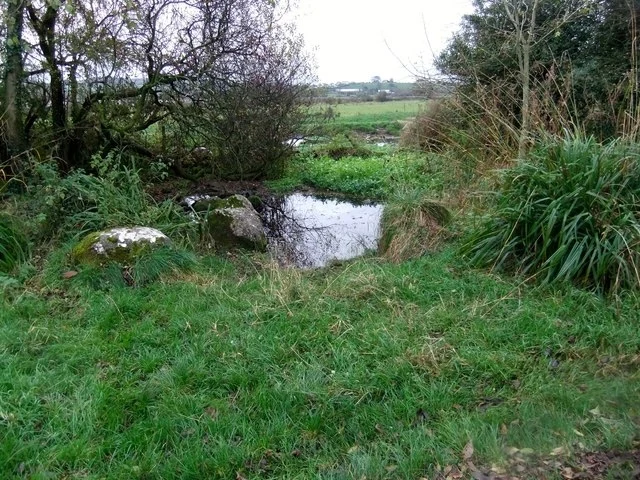
© Copyright David Brown and licensed for reuse under this Creative Commons Licence. Slowly refuse collection improved. By 1954 the County Medical Officer of Health reported that in the whole Rural District there was a fortnightly collection of “house refuse, together with the contents of privies and pails”. Refuse was disposed of by controlled tipping. For Warton this took place at Cotestones.
Eventually water carriages of sewage took over even in rural districts and water- closets replaced ashpits and pails. In 1925 there was an enquiry into cases of typhoid alleged to have been caused by shell-fish from Morecambe Bay. The Sanitary Inspector, Mr Littlefair, told the enquiry that out of 168 houses in Warton 113 had water- closets, that is 67 percent, considerably more than the average of 40 per cent for Lancaster Rural District as a whole. Millhead, with a population about equal to Warton’s, had only 40 water-closets or some 24 per cent. Mr Littlefair told the enquiry that all the sewage, throughout the area around Carnforth, was discharged untreated.
By 1954 things were better. The Medical Officer of Health’s report for that year said that the Millhead sewer was now connected to the main trunk sewer of Carnforth Urban District and taken for partial treatment at their Hagg Road works. Warton sewage was still discharged untreated, into the River Keer. (When high tide co- incided with storms, the sewage could be swept the wrong way back up towards the Weir as people still remember). However the Medical Officer was able to report that a tidal valve had recently been installed to prevent this back-flooding.
Today water-closets are almost universal, even in the most rural parts. Efficient septic tanks, requiring little maintenance, have replaced the old cesspools and made it possible to install water closets even miles from the nearest main sewer.
There is no doubt that a water closet is pleasant and convenient compared with a privy, but did privy middens and their successors, ash-pits and pail closets, have a deleterious effect on health? Successive Medical Officers inveighed against the awfulness of rural sanitation, nevertheless rural districts remained obstinately healthier than urban districts. Adults and infants alike were more likely to die in the towns. Even deaths from diarrhoeal diseases, which one might suppose would correlate with poor sanitation, were far higher in the towns. It seemed the benefits of sewers did not outweigh the other evils of town dwelling.
Published in Mourholme Magazine Issue 31 1998
by Cressida Miles
Weeks at Green Garth during my frequent holidays there in the fifties and early sixties were enlivened by the visits to Yealand of the mobile shops.
Mondays and Thursdays, as far as I remember, were Mr Brown’s days. Mr Brown was the baker’s van man, and I believe ha came from Hartley’s grocery store in Carnforth. He was a wonderful person, all brown and twinkly. He wore a brown cotton coat, and drove a small snub-nosed grey van. The van was set up with wide wooden drawers in the back, which slid out to reveal all kinds of loaves of bread, and buns, cakes and Shrewsbury biscuits, and also a small selection of sweets: mint imperials, jelly babies, licorice allsorts and fruit pastilles. A warm smell of baking wafted out into the road from the open van doors, and around Easter there would be the wonderful spicy scent of the large and particularly delicious Hot Cross Buns, which I have never since been able to match. Mr Brown was full of interesting conversation and stories. One particular story of his, which has always stuck in my mind, concerned a harvest worker who was extolling the virtues of a proper breakfast on which to go to work. The punch line of this story was: “Bacon and eggs, look out for your legs!” Mr Brown told this story with gusto, and appropriate scything action. He often came in to have a cup of tea when the sales were completed. He was a friend to us and, I imagine, to every household he visited.
Mr Postlethwaite’s van came on alternate Mondays. Mr Postlethwaite dealt in hardware which in those days, seemed to cover anything and everything from paraffin and bleach to teapots, and from cakes of green Fairy soap to bath plugs and clothe pegs. His van was like an Aladdin’s cave and had strange distinctive smell of polish, new cloths soap powder. Everyone came out of the house to watch Mr Postlethwaite slide up the slatted side and display the crowded shelves. We bought stocks of soap and cleaners, dusters and the “pink” paraffin which came out of a large container at the back of the van. All the purchases were conveyed into the kitchen and placed on the large kitchen table from which I would “keep shop” and “sell” them again to the patient adults, before they were allowed to put them away. Mr Postlethwaite too, and his helper, often stayed for a cup of tea. I wonder how many cups of tea those mobile shopkeepers drank during their travels around the villages!
Less permanent visitors were a series of fishmongers’ vans, which would come and sell a small selection of “wet” fish on the doorsteps. There was often not a great deal of choice available: plaice or cod, with the occasional piece of halibut seemed to be about the limit. The smell of these vans was predictably strong and attractive to cats who lingered longingly under any fishy drips falling from the weighing scales at the back.
I remember a vegetable van being around the village too, but noone at Green Garth ever bought from it, there being so much produce from the garden already. Other kinds of provisions could be ordered by phone and were delivered by van; the butcher brought an order once a week. He came in by the back gate, and through the garden, where he would leave bones for the delighted dogs to bury. In the later sixties the Health Food Store in Silverdale would also deliver an order if required, and I expect other shops did as well. I am sure that other people must have memories, different from mine, of these vans. They were certainly a feature of village life in my childhood, and I thought them very special. The only delivery we had in London was the milk, originally by horse and cart and later by milk van, so a shop in a van, as far as I was concerned, had a particular magic appeal.
Published in Mourholme Magazine Issue 31 1998