
by Joan Clarke
For ofens we talk to' my darter es died o' the fever at fall; An I thowt 'twur the will o' the Lord, but Miss Annie she said it wur draains. Tennyson, The Village Wife
The public health enthusiasts of the nineteenth century, like Miss Annie, were dedicated believers in drains as a safeguard against infection and death. Indeed with the population increasing so rapidly it was certainly time to find some other way of removing human excreta other than piling it on middens. In the towns the answer was, eventually, water-closets and water-borne disposal of the contents through drains and sewers, though even in towns the process was not complete even at the time of the First World War. Round here Lancaster did quite well. In 1920 the Medical Officer of Health for Lancashire was able to report that over 99% of domestic sanitary installations in the Borough were water-closets connected to main sewers. In a smaller town like Carnforth the percentage of water-closets was 69.5. But what about the countryside?
In Lancaster Rural District, at the same date, the water-closets formed only 40 per cent of all installations. However there is no need to read official reports to know that, in rural districts, water-closets were slow to replace older systems. There are plenty of people still alive who will remember the “ash-pits” and the carts that came to empty them. Even these ash-pits were an improvement on the arrangements of former centuries. We know from the Warton Manor Court Book that in 1699 Elizabeth Burrow had a dung hill “… at the uper end of the weend [Crag Road]”. It stood before her barn and was “… 3 yards in Breadth and 4 in Length”. Another ‘dunghillstead’ is described as “at the street side”. It had been there for twenty-five years. There can be no doubt that these, very public, middens received not only the sweepings of the farmyard, but also the contents of chamber pots, close-stools and privies. Close-stools (what we would now call commodes) could be used in the warmth of the house, but someone had to empty them. A privy or more properly a privy closet was sited, usually at a chilly distance from the house, over its own midden. The midden would only have to be cleared when the owner needed the dung for his land, or it was becoming inconveniently full.
It was not a practical proposition to replace these primitive arrangements with water- closets and sewers throughout a rural district. The population was thin on the ground and no local authority could think of building such miles of sewer for so few people. Besides sewers needed piped water to flush them and that was a scarce commodity. Carnforth, which by 1871 had grown to a small town of 1,061 inhabitants, out when water-closets became the fashion before the opening of its reservoir at Pedder Potts in 1879. A member of the Rural Sanitary Authority visited the town in 1876 and commented bluntly “… there was no water to flush sewers, and there was a stench from outfalls”. Other villages were slower to obtain piped water, Silverdale not until 1938.
In 1870 Dr Radcliffe of the Local Goverment Board made the sensible suggestion that, in small and scattered communities, it would be better to improve privies rather than turn to “novel arrangements”. He suggested two improvements. Firstly provision could be made to add earth or sand to the contents of the privy “to render them more solid” and less offensive to clear than the usual putrid, semi-liquid mass they contained. This type of closet was what came to be called an ash-pit. A really successful ash-pit required a supply of well-sifted ash or earth if the contents were to be kept sweet. The reports of Sanitary Inspectors make clear that these were not always forthcoming. As late as 1912 three houses in Warton were described as having “Privies in a tumbledown state. Ash Pits only holes sunk alongside the privy and roughly walled round. One uncovered and containing water from the roof of closet … this offensive liquid mingling with the privy contents.”
The second method suggested was to replace the midden by a closed, impervious container to form a “pail-closet”. Pail-closets were increasingly used in Lancaster Rural District. They formed 15.8 per cent of all installations in 1920 but 31.5 per cent by 1938. Whether they were much used in the villages of the Mourholme area is not known. Wry memories of the ash-pits have been recorded, but not of pail-closets. Perhaps someone can enlighten us.
Of course both systems required a well- organised system of emptying and disposing of the contents. Pails in particular were usually designed only to hold a week’s “supply”. Was a satisfactory frequency of clearing privies achieved in Lancaster Rural District? The answer seems to be no, not reliably until well on into the twentieth century. The problem was confounded by the fact that even in the villages water-closets were being installed and, in the absence of main sewers, these could only drain into cess-pools. These too needed emptying.
In 1902 the District Medical Officer, in despair of ever getting his Authority to move in improving conditions, called on the Local Government Board to help and an enquiry was set up under a certain Dr Mivart from London. Warton, he found, had had sewers since 1875, but the system consisted of two separate sections of pipe; the main one received drainage from water closets and led to a cesspool on ‘the Weir’, a green in the centre of the village where the school children played and where there was a watering place for cattle. It was no longer a main supply for people, but some still preferred it as drinking water because they felt it tasted better than piped water. Dr Mivart made an acid comment that it was perhaps fortunate that “at Warton … the Limestone comes to the surface … cesspools receiving liquid drainage are said never to require emptying”. One is glad to report that he was equally scathing about the whole of the rest of the Rural District.
The emptying of cesspools and privies continued a problem. In 1903 the District Medical Officer of Health said in his annual report that where the work was contracted out it might be done four times a year, though he himself thought it ought to be done every two months. Scavenging in Millhead was conspicuously good. The Carnforth Iron Works owned many of the cottages and arranged to have all house refuse and the contents of ash pits removed once a month. “The clearing was carried out between 9 p.m. and 4 a.m.” according to a Sanitary Inspector’s report. In 1909 the Medical Officer found that contractors in all the bigger villages were coming up to six times a year. In Silverdale the contractors were under contract to empty cess- pools once a month. They had also been supplied by the Council with an “apparatus” to do so. Scavenging, the Medical Officer of Health thought, was less satisfactory in smaller villages where it was left to the occupiers of houses. “I would … call … attention to the indefinite manner of house refuse removal at Lindeth. Not carried out under contract … No particular time specified for removal.”
Inhabitants of Lindeth may take comfort from the description in 1905 of Bolton-le- Sands where things were even more unsatisfactory. The Medical Officer described ash-pits and privies there; they were uncovered so that the rain soaked in, making the contents liquid and hard to remove. They were emptied by occupiers with gardens only when it suited their crops. Those without gardens had to make arrangements with their neighbours to clear the ashpits for a small recompense or for the value of the manure. Often such neighbours found it not worthwhile to empty them at all. On inspection ashpits and privies were “full to overflowing”.
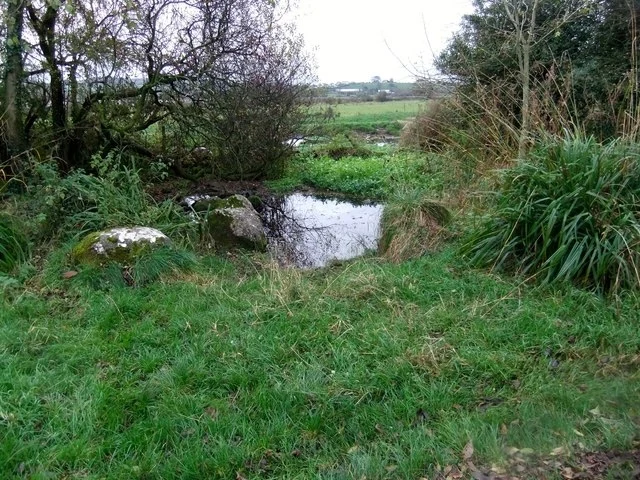
Then there was the question of where the cleansings from the ashpits were to be dumped. In October 1900 the Inspector of Nuisances found that the cesspool on the Weir at Warton had not been emptied since March. Also there had been complaints about the contents simply being left to dry on the Weir. The Inspector thought that “Arrangements will have to be made to have it carted right on to the land”. In 1915 the parish council suggested that some two acres of the sands, reserved for the residents of Warton, should be used for tipping. Nothing happened immediately. In April 1916 the Sanitary Inspector was successful in “procuring the use of other dykes for this purpose … in the field at the back of Senset Well Lane”. Senset Well was, at least, further from the centre of Warton than the Weir. The offer was taken up since the owner of the field was prepared to allow the use of it free of rent.
Slowly refuse collection improved. By 1954 the County Medical Officer of Health reported that in the whole Rural District there was a fortnightly collection of “house refuse, together with the contents of privies and pails”. Refuse was disposed of by controlled tipping. For Warton this took place at Cotestones.
Eventually water carriages of sewage took over even in rural districts and water- closets replaced ashpits and pails. In 1925 there was an enquiry into cases of typhoid alleged to have been caused by shell-fish from Morecambe Bay. The Sanitary Inspector, Mr Littlefair, told the enquiry that out of 168 houses in Warton 113 had water- closets, that is 67 percent, considerably more than the average of 40 per cent for Lancaster Rural District as a whole. Millhead, with a population about equal to Warton’s, had only 40 water-closets or some 24 per cent. Mr Littlefair told the enquiry that all the sewage, throughout the area around Carnforth, was discharged untreated.
By 1954 things were better. The Medical Officer of Health’s report for that year said that the Millhead sewer was now connected to the main trunk sewer of Carnforth Urban District and taken for partial treatment at their Hagg Road works. Warton sewage was still discharged untreated, into the River Keer. (When high tide co- incided with storms, the sewage could be swept the wrong way back up towards the Weir as people still remember). However the Medical Officer was able to report that a tidal valve had recently been installed to prevent this back-flooding.
Today water-closets are almost universal, even in the most rural parts. Efficient septic tanks, requiring little maintenance, have replaced the old cesspools and made it possible to install water closets even miles from the nearest main sewer.
There is no doubt that a water closet is pleasant and convenient compared with a privy, but did privy middens and their successors, ash-pits and pail closets, have a deleterious effect on health? Successive Medical Officers inveighed against the awfulness of rural sanitation, nevertheless rural districts remained obstinately healthier than urban districts. Adults and infants alike were more likely to die in the towns. Even deaths from diarrhoeal diseases, which one might suppose would correlate with poor sanitation, were far higher in the towns. It seemed the benefits of sewers did not outweigh the other evils of town dwelling.
Published in Mourholme Magazine Issue 31 1998