Francis Horner West (Archdeacon of Newark) (Illustrations by Alice M. West)
Extracts by John Findlater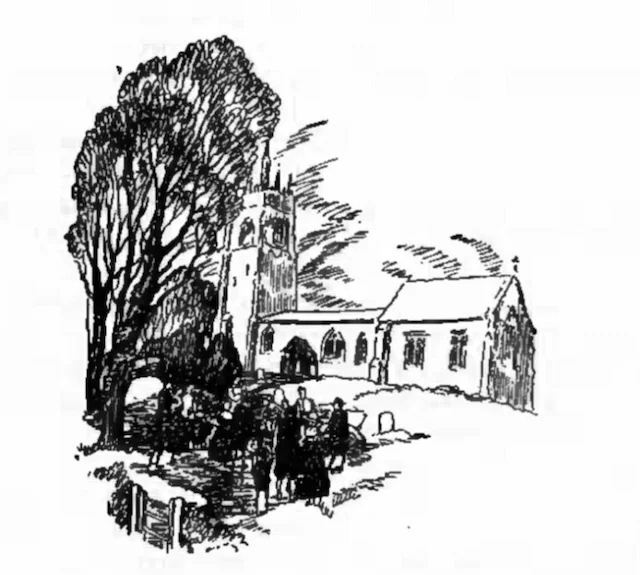
Beneath those rugged elms, that yew tree's shade
Where heaves the turf in many a mould'ring heap,
Each in his narrow cell for ever laid,
The rude forefathers of the hamlet sleep.
Gray's Elegy
In the Mourholme Society’s book, “How it Was“, we tried to give a picture of seventeenth century life in this ancient North Lancashire parish. Quite by chance, I came across a delightful, though battered, small black book with the intriguing title “Rude Forefathers”, which is about a Nottinghamshire village 1600-1666. In his introduction to the book (published in 1949), the writer quotes Macauley, “Nothing has yet been said of the great body of the people, of those who held the plough, who tended the oxen .. Nor can much be said. The most numerous class is precisely the class respecting which we have the most meagre information“. The little book helps to fill the gap using the “short and simple annals of the poor” contained in the Upton account books.
I thought I would let Arthur Penn have sight of it, and suggested that extracts from the little book would compliment our book. He returned the book with the short prefatorial piece given below. Small world!by Arthur Penn
John Findlater recently acquired a little book of this title (from Gray’s Elegy) and consulted me about its suitability as a source of extracts for this magazine. It was written in 1949 by Francis West, the Archdeacon of Newark and Vicar of a country parish near there called Upton. It so happened that I had known him from 1945 until his death two years ago near his 90th birthday. He was, in 1945, Senior Army Chaplain in the Far East and was the first person I talked with about my vocation to the Ministry. He was later Archdeacon and then for many years Bishop of Taunton. He was a good historian and at Upton he had a remarkable resource, two ancient account books, one for the Churchwardens for 1601-42, and the other for the Constable for 1642 -66. These give a vivid picture of village life and of the effect of the Great Rebellion on the rustics of a small community. John and I both thought it merited the use of extracts in this magazine. On ‘phoning Frank’s widow, Beryl, she cordially agreed to this.
Extracts from Rude Forefathers
(These are made so far as possible using Francis West’s own words. Quotations from the account books are printed in italics)
Upton-by-Southwell, at the beginning of the seventeenth century was a small village, having a population of about 300. The market town of Newark lay about five or six miles to the east; Nottingham about 14 or 15 miles to the west. Upton was subject to the independent ecclesiastical jurisdiction of a Peculiar [i.e. A parish or church exempt from the jurisdiction of the archdeacon or bishop in whose diocese it lay] of Southwell, the competent authority being the Chapter of Southwell.Jurisdiction in criminal cases and civil cases fell to the Assize Court in Nottingham and to the local courts presided over by the Justices of the Peace, the Quarter Sessions and the monthly Petty Sessions at Southwell: the village constable being the chief executive officer of the J.Ps in the village community.
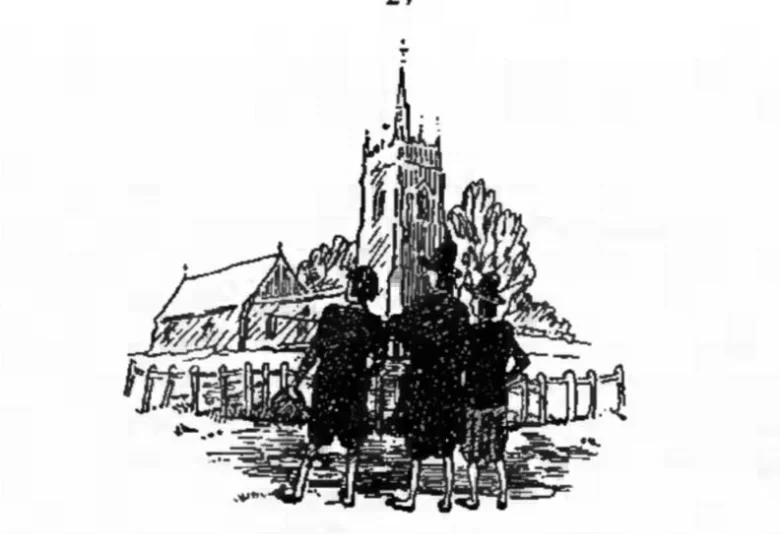
The Churchwarden and the Parish Church
The Upton churchwardens’ account books cover a surprising range of the activities. Sandwiched between items referring to the sale of the parish bull and the provision of a new church bible is a note of the wages paid to Daniel Coe the molecatcher and William Middop, the scourer of drains.It was taken for granted, then, that England was a Christian realm; Englishmen should be Christian after the pattern which Queen Elizabeth and her advisors had decreed. From the earliest days the churchwardens had been the chief lay guardians of the the parish church. But in the course of time other duties were imposed upon these men who had proved themselves capable of managing the material affairs of the church. By the Act of 1601, along with the overseers of the poor, they were confirmed as official local civil servants; the secular and ecclesiastical affairs were fused together in the person of the churchwarden. Parishioners were obliged to pay tithes, the wardens were responsible for upholding Canon Law.
It was a time of turmoil in church life. William Laud who became Archbishop of Canterbury in 1633 did his best to reform abuses and set high standards. The churchwardens were elected at the annual meeting of the vestry, it may have fallen in rotation to the holders of certain tenements; after the decease of Matthew Parlthorpe warden in 1642 his widow succeeded him. The wardens’ responsibilities were heavy and often unwelcome. Refusal to serve was so frequent that it was punishable by fine. Their expenses were paid but they received no salary; unpaid amateurs were not always made for efficiency, but it introduced a measure of self-government into local affairs. These local officials were usually substantial villagers, whose one advantage over many neighbours was their comparative literacy. At Upton there must have been at any one time at least a score of men in the population who had served as warden or constable.
The first duty of the wardens was to attend the Vicar General’s April visitation. A second took place at Michaelmas. To both of these the wardens took the answers to a questionnaire, previously submitted to them, known as the book of Articles: paide at the visitation for our examination upon the articles .. 6d. At the same time they handed in a copy of all the entries which had been made since the previous visitation, also all church registers and copies made were handed in.
After handing in the articles and registers the wardens ‘presented’ those of their neighbours who had offended the laws of the church; fornicators, blasphemers, sabbath-breakers or persons who had refused to pay their church rate. Transgressors might be warned, or made to acknowledge guilt publicly before the congregation, or possibly face the most severe penalty – excommunication. There are several references in the account book, but no details of the offences; one about the warden himself: laid forth for my charges when I was ex-communicated … 2/6d. Amongst the social disabilities excommunication imposed was the denial to them of christian burial: 29th May 1758 Robert Wilson (ex-communicated) pitted. Some sabbath-breakers, or at the least parishioners who did not attend church, were catholics or ‘papists’ or recusants; they had a fine of 1/- imposed given to Mr Martiall’s man for ye bill making about Recusantes 6d (Mr Marshall the lawyer was registrar at the Chapter at Southwell in 1625). The names of all Roman Catholics in the county were sent to Nottingham. Only one appears to have lived at Upton during this period, the wife of Gervase Staveley.
After the visitation everyone concerned repaired to an inn in Southwell for dinner. April 9th 1615 Paid for foure churchwardens dinners with oure minister 4/2.
Typical of other references to the Visitations and to the activities of the Chapter Court are the two following: Payed to the court when the church porch was presented 8/- (The wardens were fined for letting the porch become dilapidated). Paide to the chapter courte when we went to satisfied the courte that the churchyard was made soficente 3/ -.
At whitsun all parishes of Nottinghamshire were required to send an offering to the Chapter at Southwell, Upton’s quota being assessed at 3/ -. It is said that the canons, in order to entertain the unusually large crowds which flowed into the quiet streets of their little town once a year, instituted an informal race meeting in a field nearby which later developed into the Southwell races.
At the beginning of the 17th century the church at Upton was in great need of repair. The accounts record almost ceaseless restoration between the years 1601 and 1640. 1613 Spent at setting forth the wood at the forest 5/4d. Pade for cordes for scaffolds for the church 1/ -. Spent at Winkebourne at fetching home the wood 2/ -. Pade for alle and breade at casting the leads 1/ -. It is interesting to note that in 1636 Upton church was paved, probably for the first time; the majority of country churches were still unpaved at the beginning of the 17th century. This is an instance of the Laudian reforms on the rural parishes. Pade to the masone for stones and for paveing the church and south porch £1 2s 6d. At an earlier date the earth floor was ankle deep in rushes which the feet of worshippers had trodden hard. The old ruinous porch was swept away, a new one of good Sherwood oak took its place. The rushes strewn about to give warmth now covered paving stones. The font is handsomely covered in oak. The rough benches disappear, replaced by box pews with doors, some tastefully carved. One handsome pew in the old chantry chapel, complete with carpet and cushions, is for Mr Owen Oglethorpe and his family from the Hall. In the pulpit is a handsome cushion with fringe and tassels. The cracks and chinks in the windows have been repaired and there is a new oak roof. The account books are full of detail.
As at Southwell a dog whipper was employed at Upton to keep the dogs quiet during the service and to remove them if they became too noisy. Given to John Baillie for whipping dogges forth of the church 6d. The bells were constantly being repaired. The church was heated by coal probably set in a brazier in the middle of the nave. Given for five shuvvellful of coals which was used in church 10d.
There are frequent references to the payment of visiting preachers for their services to Upton church. Some were strangers and described by the wardens according to their personal appearance: Given to a preacher with the flatt nose for preaching 2/6d; Given to the wrynecked preacher 2/ -. Almost the first action of Queen Elizabeth, after her accession, was to inhibit all clergy from preaching, and thereafter the bishops only permitted clergy who had received a special licence to preach. As a result the majority of parochial clergy was prevented from preaching. Mr Wilson’s parishioners never heard him deliver a sermon of his own composition in his 40 years as Vicar of Upton! In such cases the vicar was bound to read one of the authorised homilies, the titles of which appear in the 35th of the 39 articles.One very common occurrence at Divine Service was the reading of a brief. Briefs were appeals for worthy causes; afterwards as people filed out the wardens waited at the door and invited collections. These briefs were generally unpopular. 1620. Given to a brefe that came from Bawick (Berwick) 23rd April 2/ -; given to a brefe for Benstebell (Barnstaple) in Devonshire which was all burnte 3/- 1626 Paid for a brief for the Palateneth country 2/8d. This last was for the Palatinate, overrun by the Catholic armies in the thirty years war, which was of especial enterest since the Elector, the champion of the Protestant cause, was married to Princess Elizabeth, the beautiful sister of King Charles. 1636 Given to a breefe for releeving the Palatinate ministers 3/ -. Of special interest perhaps was a brief in 1636 Paid towardes ye repairing of S. Poules church in London 6/8d. The reconstruction of St Paul’s was intended by Laud, when Bishop of London, to be symbolic of the revival of the Church of England. The King’s interest had been aroused and briefs were issued for raising the money. Another interesting brief was for the infant colony in Newfoundland : Given to a breefe at the request of the Lord Archbishop to the Captaine concerning newfoundlande 1/4d. The Privy Council issued letters patent authorising appeals: Paid to a letter patent for twenty five hundred captives under the Turks 2/6d. Justices of the Peace were also empowered to give testimonials to individuals who had suffered loss, authorising them to beg from place to place: Given to a pore man that came from Cornwell with testimony of losse by fire to the vallew of £200 being published in church August 27th 6d. Given to a man that had his tonge cote out of his mouth by the Torkes the 6th day of September and had a passe 4d.
The annual rogationtide procession is frequently mentioned in the accounts. Its origin was religious but in the 17th century it had become popular in the village, serving a secular purpose by making its way round the parish borders to make sure the neighbouring parishes were not encroaching; it became known as the Beating of the Bounds.1616 For breade and drinke at the perambulation about ye feildes. 6d
Civil War
The book contains much about the Civil War which had a direct impact on Upton. In 1643 Newark became a storm centre in the Civil War between King and Parliament. Rival armies infested the peaceful Midland countryside. Day by day the constable, who as chief executive officer of the parish, had to deal with this new situation recorded in his account book its effect.Unconsciously he became an historian of the Civil War. The constables of Upton, over a period of five years, recorded eloquently what official historians have often neglected: the impact of war on Mary Kerby, whose hen was stolen by a trooper, on Thomas Kitchen whose mare disappeared during a raid from Newark, and on Mrs Robinson, whose husband was killed in a scuffle with the plunderers.
On February 9th, 1641, the constable noted in his book – Given to a linen draper of Newcastle which was deprived of all his goods by ye Scots to ye valew of two hundred pounds having a wife and six small children 4d. Provoked by King Charles’ attempt to impose the prayer book, the Scots crossing the Tweed over-ran the Border Country as far as Newcastle, which they reached in August 1640. Six months later the constable listened to his story and took pity.
The King left Oxford in the spring of 1642 to join his army in the North. At Upton the constable was obliged to supply two horses for the King’s retinue. As the summer wore on he was also obliged to find billets for the volunteers on their way to join the King. 16 April Given to a woman travelling to her husband he being in the King’s service in the northern parts of England 4d.
Sometimes deserters, wounded, sick and discharged soldiers flowed the other way. Given to two soldiers being sore maimed haveing their wives and many small children 4d. Given two drummers which were dismissed the King’s service 7d.
On the 12th August 1642 the King raised his Standard at Nottingham having left Lincoln and made his way there by way of Newark and Upton, though there is no reference to this in the constable’s book. Not finding great friendliness at Nottingham, it was abandoned by the Royalists who chose Newark as their centre. The constable was summoned to Newark and was called on to levy money for soldiers’ pay, eggs, butter, meat, oats, hay and pease. Horses and carts were requisitioned by quartermasters. Spent when I went to Newark with carriages with coles 6d.
Worse was to come. Parliamentary forces established themselves at Nottingham and laid siege to Newark, with counter-attacks by the Royalists and Upton militiamen were involved: Spent when we were at the battle of Newark £1. Queen Henrietta Maria arrived at Newark from Bridlington, where she had landed with re-inforcements from the continent, necessitating further exactions. Paid to George Wood and Richard Wood for going to Newark when the Queen was there 6d. When I went to carry provision for the Queen spent 4d. The Queen left for Oxford on July 3rd but not before levying a tax on Upton and Morton. Spent when Morton men came to Upton to consider with the neighbours about the draught to goe with the Queen 8d. For the rest of the year almost continuous exactions were made for the King and finding temporary billets for his men. Paid to John Chapell for his fether bed which went to Newark £1.2s5d. For lodging a captayne and two men and four horses. His troops lay in our town and nobody would lodge him. I having all my beds taken up before was fayne to lodge him in my bed 1/ -.
When earthworks were thrown up around Newark, and ditches dug, men were compelled to leave the fields and labour on this. For going with the ditchers to Newarke 6d. Payed for boting men over (the Trent) when they went to the workes 4d. When the King’s forces withdrew from Nottinghamshire in January 1644, though Newark still held out, the area was overrun by Parliamentary forces and the same assessments and payments went to the new masters. This altered temporarily when Prince Rupert relieved the garrison briefly but meant Upton was forced to help again. When assessments were thought excessive the constable courageously stood up to the quartermaster’s demands (as in fact did William Robinson, the churchwarden, who would later be killed). For going to Newark when Major Palmer would have quartered thirty men with us, spent 1/2d. Sometimes the oppressors were open to reason. The villagers kept a look-out so that they might attempt some precautions. Paid to Thomas Kitchin for watching one day upon the church steeple 1/ –
Then the Scots, under General Leslie, joined hands with the Parliamentary forces, who were forced to live entirely on the land, and whose depradations were therefore severe. After their departure in May 1646 the constable wrote assessment to the Scottish army from 4th February until 6th May 1646, being 13 weeks, sixty-nine pounds six and threepence, a rate of five pounds six and eight by the week. An enormous sum in so short a time for so small a village!
The King surrendered to the Scots on May 5th at Southwell. He was prevailed on to order the Newark garrison to capitulate. Life began to return to normal though for months distressed folk of one kind or another needed help. Given to two distressed cavaliers that had been prisoners in Wales traviling to Pomfrett (Pontefract) and being in great want 8d
With the coming of peace, opportunities were given to the villages which had suffered in the war for claiming compensation though this entailed tedious form filling. Payd when we did meet at Jarvis plowman concerening giveing in at Nottyngham a boke of our losses from the Scots and what other losses we did sustayne by any other soldiers. The town’s charge at the meeting was 1/8d. When Mr Ballard [the vicar] and I went to Mr Crumwell to knowe in what forme it might be put in. Spent 8d. The last entry of the period of strife was made a year later –Spent at Jervas plowmans when the shouldiers came to shurch for arms 6d (February 1650).
In his article on the Police Force, John Jenkinson writes about the Parish Constable, as important in the earlier years of the nineteenth century as in the centuries before. John portrays the constable as commonly a lazy or incompetent or not too scrupulous conscript. It seemed a quite instructive exercise to set out, in extracts from Archdeacon West’s book, the work undertaken by the Constable in Upton by Southwell in the seventeenth century, albeit at the most unusual time of Civil War.
The Constable
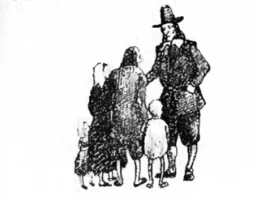
On the Constable was placed the responsibility of preserving law and order amongst his neighbours. The office like that of warden fell in yearly rotation on the principal householders who were compelled to serve or find a deputy. Mathew Parlethorpe constable this present yeare 1654 beginning when his brother William left, both for Mr Browne’s his house this yeare. This entry at the opening of a year’s accounts suggests that Mr Browne whose turn it was to serve, found deputies in the brothers Parlethorpe, possibly on the grounds of age or infirmity. In 1644 the office fell to a woman householder who hired a deputy to serve for her: The laying forth of Jane Kitchin Widow shee hiring one to serve the constables office this present yeare 1644.
The constable’s duties were strenuous and required a man of vigour to perform them. The office of Constable originated under the ancient manorial system, and as late as the 17th century the Upton constables were still sworn in at the Archbishop’s Court which met in Southwell at Whitsun. But the Courts Leet had declined in importance since jurisdiction in criminal and legal cases had been taken from them, and they now dealt chiefly with questions of tenancy within the manor. In the meantime, the constable had become the chief executive officer in the village community of the Justices of Peace and the High Constable of the County. When in 1642 the Excise courts were established the constable was expected to carry out their business as well. The constable, an amateur, received no remuneration, though the expenses incurred were paid out of public funds.
The Justices issued warrants of arrest to the constable: when Mr Cludd sent his warrant for the bringinge of George Yellicott and George Bykerke before him to answere some complaints made by George Smith and his wife spent 1/8d.
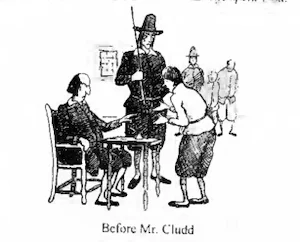
When a disturbance took place or a crime was committed, the constable was summoned. If the criminal had escaped it was the constable who called together the neighbours and despatched them in search of the fugitive. Given to ye men that gathered for a robberie 1/ -.
Anyone who refused to give chase or lend horses for that purpose was liable to a fine. These chases were known as Hue and Cry, and were frequent. Given to Richard Taylor for going to Aram with a Huincri in ye night 2d. Sometimes when the constable despatched his neighbours on official business of this kind he had to find a deputy for them in the fields. Payed to Michael Skinner for driving plow for George Stanton when he and Goodman Gill went to Newarke 2/ –.
Once the lawbreaker had been arrested the constable was responsible for finding a place where he could safely be kept under lock and key until such time as he could be brought under guard to the Justice. Spent when Thomas Godfrey was watched all night and most part of ye next day at George Cullin house by John Pettiford and Edward Greaves 1/6d.
Minor offences were dealt with summarily by the Justice, who might be content with letting the offender go with a caution. Drunkenness, swearing and hooliganism were usually punished by a session in the stocks Given to Edward Harper for making ye stockes 1/. More serious offences were reserved for the monthly petty sessions presided over by a Justice, or the quarter sessions held every three months at Southwell or Newark. The constable attended these sessions. My charges at the General Quarter Sessions holden at Newarke 6d. My charges at Southwell when I went to ye monthly meeting 1/ –.
Sometimes he was called upon to select some of his neighbours to serve as jurymen at the Coroner’s court at Southwell. My charges at Southwell when I was charged to bee upon a juery concerning the deayth of Marttin that hanged himself and Bromet wife that was drownded 6/ -.
The constable was expected to co-operate with the churchwardens in guarding the morals of the community. During the regime of Oliver Cromwell a particularly vigorous onslaught was made. Locally Edward Cludd, a stern puritan, represented the Major General for Nottinghamshire. When I went to deliver in a bill of the alehouses and whom was the fittest persons to continue with brewin 1/4d. Paid for a decolaration from His Highness (the Lord Protector) for regulating ye Sabbath 6d. Some of the clergy were suspected of scandalous behaviour, others of laziness and incompetence. Paid for carrying a warrant to Hockerton concerning scandalous ministers 2d. But the commonest offence was the illicit use of the forbidden prayer book. The Cavalier parliament of Charles II passed Acts restricting the Puritan sectaries but Quakers who had tried the patience of government were severely treated. Allowed our trayne soulders their charges when they apprehended some Quakers in our towne and conveyed them to prison. 13/ -.
1642 was a landmark in the history of taxation, moving away from ancient feudal dues to more systematic collection even from the poor by regular assessments. Each locality had a lump sum fixed for it, and left the locals to work out local assessments. The losse of my dayes woke when I waited a whole day at church and towled (tolled the bell) for neighbours to make an assessment 1/ -. The regularity of the new form of direct taxation was much resented and sometimes military pressure was necessary. Spent on soldiers when they came to distraine for part of the assessment 3/ -. (1655). After the Restoration the quarterly assessments were retained. But to them was added, in 1662, the most unpopular of all 17th century taxes. This was the Hearth or Chimney tax which was particularly odious because it was supposed to fall relatively more heavily on the poor than the rich, and even more because it necessitated the visits of inspectors to private houses. At Upton the counting of the chimneys and the collecting of the tax were left to the constable who would be unlikely to arouse the dislike of his neighbours, by an unnecessary show of ‘insolent pride’. My charges gathering chiney money at Mr Smiths 6d. My charges at Southwell 3 severall days to procure a warrant for distrayning 1/-.
A form of indirect taxation which was introduced in 1642 also met with opposition and criticism, again because it was a departure from a traditional English principle of taxation. This was the Excise, imposing duties on articles made in the country for sale (previously duties had been imposed only on imported luxuries), especially when in 1643 a duty was put on beer, cider, ale and soap; and after that cloth, flesh, salt, hats, starch and copper goods were included. Every butcher’s shop and alehouse had to be licensed. When I was sent for by warrant to the Exise man to bring a bille of those that brewed without licence 6d. Laid out to 4 men to watch Thomas Harries house that night he fled upon the search for mutton 2/6d.
The constable was also responsible for collecting local and county rates. These were imposed piecemeal for particular expenditure, for example building bridges and erecting houses of correction. These latter were harsh places of detention for vagrants, the idle, and the vagabond; they were set to work with hemp and flax, bought out of rates, to help maintenance. In the County Gaol prisoners of means were expected to pay their own expenses. Payd to Mr Trueman at Southwell ye 25th day of July towards the building of a house of correction a quittance 14/2 (1652). Payd to Mr Trueman for building the Muscam bridge 14/2.
The burden of taxation in a small rural community like Upton, consisting of about 70 houses, can be estimated by the following figures for the year 1662:
£ S D Direct National Taxation (Quarterly assessment) paid through The High Constable in 4 quarterly instalments of £9 3s 9d 36 15 0 County rate (‘Quarterly dues’) paid in 2 six-monthly Instalments to the High Constable 14 0 Relief of poor prisoners (County rate) 4 8 Repairing of Leane bridge (County rate) 5 5 Total £37 19s 1d This figure should be compared with that of 1641, the year the account book opened, when there was no quarterly assessment and the county rate, including gaol money, amounted to only 16/ -.
The references to the Post Office at Newark are of particular interest because the Postal Services underwent a thorough reorganisation in 1635. Previously the Post Office was for the service of the Crown as the King moved from place to place. In 1635, at the suggestion of Thomas Witherings, the Postmaster for foreign parts, a Post Office for Inland letters was set up. After the Restoration it was the practice of local offices, like Newark, to exact an additional penny over and above the charge imposed by the General Post Office, on all letters which passed through. There was difficulty in collecting this extra penny and it fell to the constable to collect it from those who had received letters. Payd to ye postmaster for three years that was behind with him £1. If Upton owed the postmaster 240 pence for three years delivery, presumably 80 letters a year arrived in Upton, just a little more than now (1949) arrive in a day.
It was customary for the constable to be directed by warrant to find the required number of men in the parish to serve in the militia and attend the musters. He also had to equip them with arms and horses out of a rate levied on the parishioners. My charges ye 27the August when I had a warrant to charge a man and horse to goe in for ye mala and none of our neighbours would goe nor provide a horse to take with me 2/6d. However, the next day: Layde out in charges ye next day after at Mr Oglethorpe and I went to Nottingham and had a mare of William Horsepole at would not passe 4/6d. This mare being rejected the constable was given a week to find another. Finally, success: Layde out in charges ye first day of September at Nottingham being ye first day of ye muster. Mr Oglethorpe, and I went to meet Mr Blankna to have ye horse approved on 4/6d. Further entries follow.
Then in 1662 two Acts were passed remodelling the militia. The greater property owners were charged individually to provide horses, arms and men. The smaller proprietors were banded together in groups under the supervision of the constable, each group being responsible for the provision and the equipment of one man to serve for three years, as a horseman or foot soldier. Paid to our common soldiers for their service at Newarke ye 19th and 20th September 6/ -. As the soldier’s rate of pay was 1/- a day, this entry suggests that Upton provided three men for the militia.
The account book gives a permanent record of nearly every humble traveller who came to the village over 25 years. These 17th century travellers might be divided into four classes. First of all, there were the well-to-do who could travel at will and at their own expense. Of these there would be no record in the accounts.
Secondly, there were discharged soldiers and sailors returning.
Thirdly, there were unfortunate people who had fallen on evil days and were returning voluntarily or by compulsion to the place of their settlement or to friends and relatives. Lastly there were the vagrants. The Elizabethan Poor Law had forbidden unlicensed begging. A criminal, if caught, would be whipped or sent to a House of Correction. Given to two vagrants which was whipped 2d. If through sickness or other misfortune people fell on evil days, it was the duty of the wardens and overseers of the poor to provide for them out of the local rate, but if it could be shown that a pauper had no settlement in the parish and his place of settlement could be discovered, the wardens would procure a pass from the Justice and pack the unfortunate off.
So, the highways were thronged with unfortunate people, passing from constable to constable to their place of origin. On entering the village they could call on the constable to provide them with food and lodging and money for the next day’s journey. Given to a poor man and his wife and five children which lay a day and two nights in James Bloomer barne 1/8d. Given to a lunatic woman havinge a testimonyalle of her grievous servitude in Bedlam 2d. Given to a woman that was great with child to get her away 2d. Given to a little girl the 8th day of January which was sent from constable to constable by a pass to ye place of her birthe 2d. Given to a poor man, his wife and three small children June 25th. One of the children being very sore sicke for feare the child should die in this towne I gave them to be gone 8d.
No travelling was allowed, even for vagrants, on the Sabbath, and those who arrived late on Saturday night had to be boarded until Monday morning. Given to two poore travellers their wifes and children which lay at my house ye Sabbath day, had meat and money ye 19 of November 6d.
Soldiers returning from the wars overseas were granted passes and every facility for returning home. Given to a souldier haveing been thieteen years in service in highe Germany 3d. Given to a souldier ye 27th May which were maymed havinge beene long tyme in the Kinges service in ye Low Countries 2d. These doubtless were veterans of the Thirty Years War in Germany which came to an end in 1648.
For many months after the cessation of the Civil War many unfortunate people were caught up in the disturbances were travelling about. These were not only discharged soldiers, many wounded, ex-prisoners but others like Anglican clergymen who had been expelled from their livings. Given to a decayed minister 6d. Given to a distressed minister, his wife and child April the 4. He would have stayed to preach 4d.
Two other types of traveller frequently seen were the gypsies and refugeees from Ireland. Given to six gieptians 6d. Payd to Smith wife for candles the Egyptians had that lay in William Gill lath [barn] Given to ten Irish people in companie that had great losse by the rebells in Ireland according to their testimonial haveinge beene at the High Court Parliament and haveinge certificate from the justices to be relieved on their way to Yorcke 1/ –.
The extent to which an Englishman experienced interference in his life is strikingly revealed in the account books. Duties were thrust upon him, on Sundays he had to go to church. As the century advanced his pocket was touched more and more by taxes, often involving the inspection of his home. But he was not a serf, he had rights and privileges, and through his obligation to take on irksome duties, such as constable, he learnt the art of managing things for himself in his own time and in his own way.
Perhaps the two things that stand out in our minds about the seventeenth century are the Civil War and the epidemics of plague.
The extracts have given some idea of the considerable impact the Civil War had on Upton. Plague hit Upton very hard at the very beginning of the century, when it was ravaging Nottinghamshire. In 1609 as the burial registers show, it descended upon the three hundred inhabitants of Upton, carrying away in the space of eight months eighty-three men, women and children; the following year it appeared at Rolleston, a mile away, apparently with almost as disastrous results.
A scrutiny of the list of burials reveals some of the domestic tragedies: 15 Oct., Anne dau. of Nicholas Martin cottager dominica and within three months, her father, mother, brother and sister were all dead. Christopher Johnson, labourer, was buried on the 14th December. By Twelfth Night his wife and three children had followed him to the grave.
Many of the bodies were buried at night. Frances Cover, commonly so-called alias Johnson. Buried in the night about five to eleven, 8 June. Jane Rawson dau. Joh Rawson, who was buried in Nov. Last likewise departed this Maie 8 and was buried before mydnight at 8 Maie.
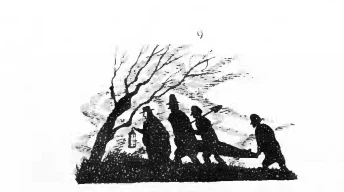
The Plague
To segregate the living victims of the plague from those who were still free from it, huts were built outside the village on the Newark Road. Katherin Cullen servante to Owen Oglethorpe gent. Departed in a cabine in ye feildes die Veneris (Friday) and was buried ye night 15 June. William Robinson servant of Thomas Pryde and son of William Robinson departed anno. 1600 dymised in a cabine in ye feildes.The marriage register records that a couple from this rough and ready isolation hospital were not deterred by the plague from marrying. Robert Staynton of this parishe lying awhile in a cabine in the field in East warde and Ann Snathe, lykewise a certain tyme lying in another by it, nowe of this parish, die. Lune (Monday) 10 Sept.
At the end of July 1610 , the vicar, with relief, entered in the burial register the words Cessavit Plaga but in the space of eight months the village was bereft of nearly a third of its. population.
The Hall
Owen Oglethorpe, gentleman, who died at Blidworth during the plague time at Upton, lived in the principal house of the village. The inventory of his goods gives us a picture of a small squire’s menage in the time of King James I.During the previous reign the houses of the nobility and gentry had undergone a complete transformation. Originally the great hall, with its central fireplace and roof open to the rafters, served as a living and dining-room for the whole household, family and servants as well. But the increasing demand for more privacy and comfort by day and by night in Tudor England profoundly affected domestic architecture. The tendency was to multiply small living-rooms, parlours and chambers, at the expense of the great hall, or the ‘Bodye of the House’, as it was called. The ‘House’ still remained, but it was now reduced to the status of a dining-room pure and simple. When the whole house was not pulled down and reconstructed, partitions were erected in the hall to provide parlours at either end; and the removal of the fireplace from the centre of the room to the wall made it possible for the builder to place a ceiling at the level of the window-tops with bedrooms among the rafters above. Mr. Oglethorpe’s house at Upton, with its parlours adjoining the hall and its chambers above is typical of the small Elizabethan manor house.
Like the Vicar, Mr. Oglethorpe used two downstairs parlours as bedrooms. Upstairs there were three chambers, all of them bedrooms; one of them, at the ‘steyre head’ was reserved for the master of the house and his lady. The maids had a parlour of their own, for servants were now expected to keep out of the way when their master and mistress relaxed of an evening.
Though only a small country squire, Mr. Oglethorpe was beginning to indulge in some of the fashionable luxuries of the time. His guests would note the six silver spoons and the gilt salt cellar when they supped at his table. They were together worth £7, a considerable sum in those days. A looking glass, a rarity in the early seventeenth century except in the mansions of the wealthy, hung on the wall. The painted cloths which the Vicar could only afford in his best parlour, adorned the walls of the hall, the parlour and the best bedchamber. One of the six cushions in the parlour was of silk. The windows were curtained.
But in spite of these luxuries, Mr. Oglethorpe’s mansion was not very grand even by early seventeenth century standards. It had, for instance, no long gallery, serving as a drawing-room, at the stair head, which was a fashionable feature of the country houses of the greater gentry of this time.
The domestic quarters were far more extensive than at the vicarage. They and their contents show how manifold were the activities over which the mistress of a gentleman’s house was expected to preside three hundred years ago. Beside the usual firkins, kitts and tubs, there were in the kitchen, buttery and milkhouse, a churn, a cheese-press, a mash vat for making cider or wines, a gile vat for fermenting beer, a sough or brewing tub, a salting vat for pickling meat for winter, a ‘leade’ or copper for dyeing clothes, a steep vat for laundry, and several spinning wheels and looms. There is also mention of a supply of grease from which soap and candles would be made. In the parlour was a ‘stille’ for making cordials, medicines and perfumes, a branch of domestic science about which many books were written for the direction of housewives at this time. Considering that the majority of young housewives, mistress Oglethorpe among them, spent the first ten or twenty years of married life in bearing and bringing up children, we may well wonder how they found any time away from domestic responsibilities for rest or leisure.
The Farmhouse
Thomas Cullen, yeoman, died in 1628 a few months after Mr. Wilson the vicar. His house of ten rooms was almost as large and well appointed as that of the squire. As this was the golden age of the English yeoman, it is not surprising to find every sign of prosperity in Goodman Cullen’s home. When the ancient manor decayed and the agrarian economy which had been based upon it began to break down, the English yeomanry came into its own. The medieval husbandman had only one purpose, and that was to raise sufficient crops and stock for himself and his neighbours on the manorial estate. By the end of the fifteenth century the growth of the towns and particularly of London opened up a new horizon for the land-worker, presenting him with markets right outside his own neighbourhood, provided, of course, he could produce a surplus over and above his own local needs. There was a new incentive for enterprise and a new source of wealth for those who were sufficiently painstaking to grasp the opportunity. The successful husbandman was able to buy his own property and reconstruct it out of his own pocket, and wherever possible, enclose his strips in the open fields.It was at this point that the husbandman stepped into the proud ranks of the yeomanry. From the fifteenth century the word had come to denote a rank or status in rural society employed only by the freeholder, distinguishing him from the husbandman who still continued in the less envious position of tenant farmer. The seventeenth century yeoman was very conscious of the dignity of his status: he was addressed as ‘goodman’ but not yet as ‘mister’ a title which was then reserved for the gentry and members of the learned professions. The distinction between the social status of Mr. Oglethorpe and Goodman Cullen, and their counterparts throughout England, is not easy to define. Gentility was associated with birth and lineage, and contact with a larger world than was open to the yeoman. Mr. Oglethorpe had a small library of books and probably visited London. Thomas Cullen apparently, could not write his own name and the limit of his travels was, in all likelihood, Nottingham. His interests were confined to the soil which had made him the man he was. From the ranks of the gentry came the Justice of the Peace. The yeoman did not as a rule serve the local community in a higher office than that of churchwarden or constable. Goodman Cullen was warden at Upton in 1619.
The yeoman laboured under many disadvantages, which all his resourcefulness could not overcome. In spite of the spate of books on agricultural subjects during the sixteenth century, the science of agriculture was still at an elementary stage. Labour was short on account of the universal incidence of the plague and the appalling infant mortality of the time. The plague of 1609-10 killed off many labouring men in Upton and disrupted the life of the village for twelve months. Antiquated methods of husbandry were prolonged by the Open Field system, and even when a yeoman succeeded in enclosing his strips, they were often scattered all over the fields to his great inconvenience. Yet the yeoman waged a valiant and unceasing warfare against every kind of difficulty, thus justifying the later expression ‘yeoman service’.
Thomas Cullen’s house consisted of hall, nether parlour, middle parlour and a bedchamber above. There were also a kitchen, buttery and three upstairs chambers for storage. In his attempt to achieve refinement he had, like Mr. Oglethorpe bought a set of silver spoons. He had expensive carpets, the early name for thick tablecloths, to adorn his tables and there were more chairs in the house than at the squire’s. The nether parlour must have been a very cosy room. The great bed had curtains and a valance, and a liberal supply of linen sheets upon the feather mattress. Over all was laid a green rug. All these were luxuries of which Thomas Cullen’s grandfather, who probably slept on a straw pallet with only a hempen sheet to cover him, would never have dreamed. The windows were curtained and there were eight cushions in the room. His wife was obviously trying to be the lady, for she had a looking glass, a rarity in those days except in the bedchambers of the wealthy. The seven children slept in the upper chamber and in the middle parlour where there was a cradle for the youngest.
In spite of the increasing comfort and refinement of the seventeenth century yeoman’s house, he lived very close to his agricultural implements and the produce of his fields. Three of Thomas Cullen’s upstairs rooms were used for storage. In the ‘corn-chamber’ was rye, pease, barley and malt. In the ‘store-chamber’ was bacon, cheese, oatmeal, grease and wool. In the ‘chamber’ above the kitchen was sawn timber, two winnowing pans and a bedstead. This bed was probably used by a labouring man who ‘lived in’. It was customary for single workers, until they married, to live under the same roof as their master and to share in the comparative luxury of the yeoman’s larder. In return for food and lodging they accepted a lower wage. The system discouraged many young labourers from marrying early, for it was difficult to maintain a wife and family once a man had substituted an independent existence in a cottage for the security and more carefree life under his master’s roof.
An extract from the inventory of Thomas Cullen’s house and yard indicates the extent of a small freehold farm in the early part of the seventeenth century.
£ s d Corne in the field 14 acres barley, 16 acres of pease 44 0 0 The Fallowes 8 0 0 Nine horses and mares yonge and olde 20 0 0 Five kine thirteen yonge beasts 24 0 0 Twentie foure sheepe 3 6 0 Swyne with all the poulterie in the yarde 4 0 0 A stocke of bees 5 0 Woode and cole 2 10 0 Carte timber and plowe timber 1 0 0 Three ironbound carts: two wayne bodies One grate harrowe two paire small harrowes 8 0 0 Plowes plowe irons with horse geares 1 0 0 Two brandroths one stone trough 10 0 Two hovells with some pease upon one of them 3 0 0 Racks and mangers, beast boosts with all the pales about the yard 1 0 0 Haye in the barnes 10 0 0 From this extract it appears that Cullen was using horses for ploughing not oxen. The horse of his day was of a much smaller breed than the cart horse of today, for it was not till after the restoration that the ‘Great Horse’ was transferred from military service to labour in the fields. The bee-hive played an important part in the countryman’s economy. Sugar was scarce and honey for ordinary people was the only means of sweetening food. It was also used in brewing. During this period many treatises were written on the subject of model bee-keeping; one of them by Charles Butler had the romantic title ‘Feminine Monarchie’.
Thomas Cullen’s supply of coal probably came from the West Nottinghamshire pits which had already been opened. The ‘Wayne bodies’ were carts used for bringing in the harvest. To save space they were removed from their wheels and stood in the barn when not required. The ploughs were made of wood except for the share which was of iron. The hovell was a small shed for storing hay, straw or pease: it was usually built on stilts to keep it clear of the damp ground and of vermin. The ‘beast boosts’ were stalls for cattle. The hay in the stack and in the barns was worth £10, a large sum of money; but before the time of artificial fodder and the turnip, the beasts were entirely dependent upon it in winter.
The Cottage
William Beacocke was a labourer of the poorer sort. The church-warden’s account book refers to him as a scourer of the drains and dykes in the parish. He married in 1601 and had four children. They lived in a two-roomed cottage. As there is no mention of an upstairs chamber or loft, the rooms were open to the beams which supported the thatch. None of the modern luxuries in which Goodman Cullen indulged were to be found in the cottage. Everything in it served some utilitarian purpose.In the hall was a table for meals and two tressles which would be used for dressing hemp. For seating the family had a bench and stool: there were no cushions here to rest the labourer’s back when he returned from a hard day’s work in the dykes. In the corner was a loom and a spinning-wheel.
In the parlour was a supply of rough bedding made of hemp and harding for a poor man, like Beacocke, could not afford linen; nor, of course, was there such a thing as a feather bed which even a yeoman’s son could not afford at this period until he had been married a few years. As there is no mention of a bed of any sort, it is probable that the Beacocke family still slept like the mediaeval peasant on straw palliases. The one sign of improved conditions is the two pillows and pillow-beares (a narrow sheet used to cover the pillows before pillow-cases came into general use) and a coverlet. William Beacocke had no cupboard: perhaps the cottage was not big enough to hold one. All the family treasures were stored in two chests in the parlour.
Beacocke’s wife, who did all the cooking in the hall, had a very limited supply of cooking utensils. A kneading trough, two kitts, six dishes, five earthenware pots, five bowls, two pans, a temse or sieve, three pieces of pewter, a cheese vat and a cheese board are all that are mentioned. The ‘three pieces of pewter’ were her most valuable possessions, as much prized by her as were the silver spoons by the yeoman. There was also a flacket: this was a leather bottle in which the labourer carried his beer into the fields for his midday meal.
In the yard adjoining the cottage was a little hovel-house, a heap of manure, a few hens and a sow and three pigs. William Beacocke’s purse and apparel were valued at five shillings ; the whole of his possessions £3 9s 2d.
Upon this little cottage the plague descended in March 1609-10. Ellen, the second girl died on the 13th and William the breadwinner five days later. Before the end of the following month the three other children had died. Only the mother survived.
Beacocke’s standard of living was low. There were other labourers in Upton who were more prosperous and therefore lived in more comfort. The goods and chattels of Gabriel Birch, labourer, who died the same year were valued at £19, six times more than Beacocke’s. Birch had a store-chamber over the parlour, two small strips in the Open Fields, twenty sheep in the common pasture, a heifer in the ‘cowe hous’ and a sow and two pigs in the yard. With his pewter dishes, candlesticks and salts, brass pots, two bedsteads with linen sheets, and ‘four olde quishions’ (probably given him at some time by his employer) he was almost as well to do as the Vicar. Beacocke is typical of the landless labourer: Birch, who had his house on lease at the time of his death, represents a class common in England till the nineteenth century, which, though wage-earning possessed strips in the fields and cattle in the pastures, and was therefore not entirely dependent upon wages.
Perhaps it would be appropriate to finish these extracts from ‘Rude Forefathers’ with the first illustration in the book (by Alice West) followed by the quotation from Gray’s Elegy which Francis West uses.
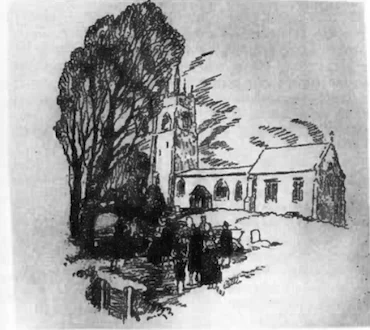
Beneath those rugged elms, that yew tree’s shade
Where heaves the turf in many a mould’ring heap,
Each in his narrow cell for ever laid,
The rude forefathers of the hamlet sleep.
Gray’s ElegyPublished in the Mourholme magazine issues 40, 41 42 and 43 between 2000 and 2001